
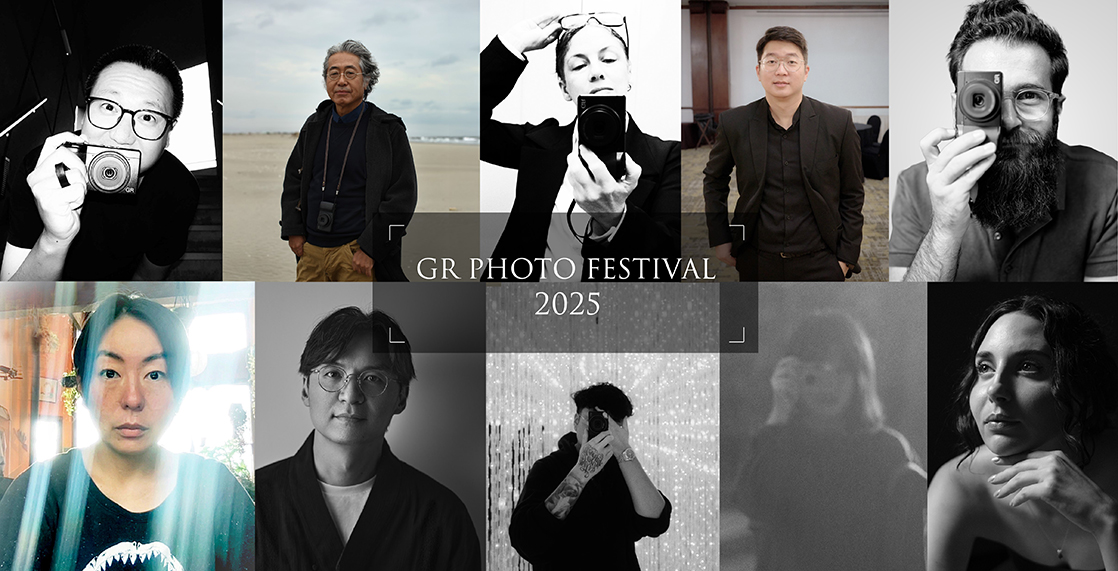
The GR PHOTO FESTIVAL 2025 is a photo contest open to all customers around the world who enjoy taking pictures with their GR series cameras, and is based on our passion for photography as expressed in the phrase, "Take out your camera. Enjoy daily photographs." This contest began in 2022.
This photo contest is different from conventional contests, where entries are ranked in order of excellence, in that professional photographers from around the world will be commissioned to select works from their own perspectives. No prizes or prize money are offered.
The theme is "Daily Life.”
It is in your ordinary day-to-day life that you find precious moments.
Having a camera reminds you of that every day. Try capturing important moments in your "Daily Life" with your GR!
We hope that the GR PHOTO FESTIVAL will provide you with an opportunity to find new ways to enjoy photography and discover new perspectives. We look forward to submissions from all over the world.
We have received approximately 10,000 entries of photographic work from various regions throughout the world based on the theme of “Daily Life” from everyone’s individual perspective.
We would like to thank everyone for their entries.
We would like to present the three photos selected by each of our 10 judges from all over the world.
* Alphabetical order by last name
-
Ary Marques da Silva
(Switzerland)
GR III
Judge's comment
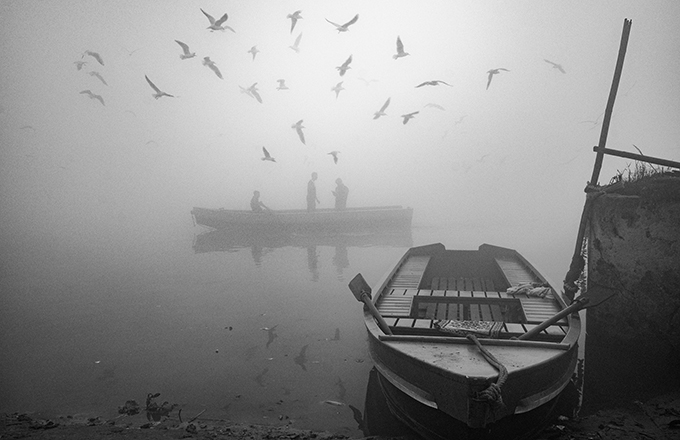
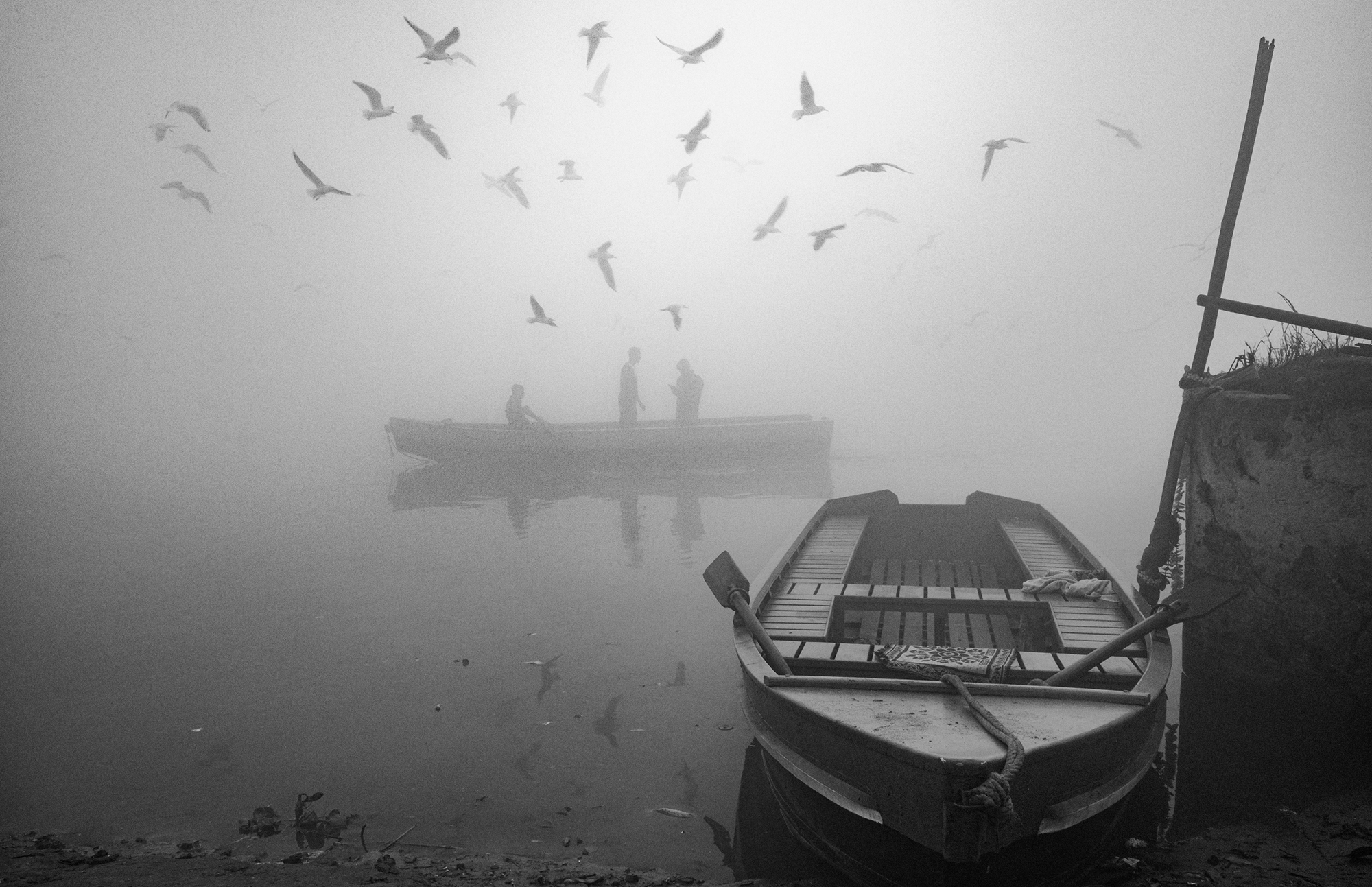
This picture is quite mysterious. What are these three people doing? Where are they headed? The flock of birds suggests they are fishermen at work, and this shot truly captures a glimpse into their daily lives. The beached boat feels like an invitation to join them and discover what lies hidden beyond the mist. -
33t
(China)
GR III
Judge's comment
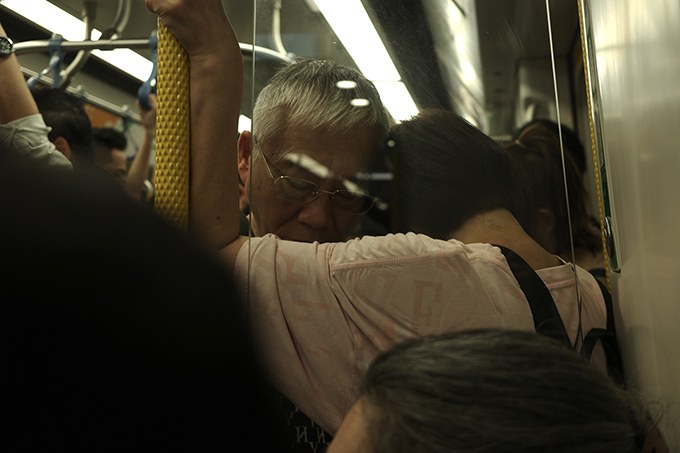
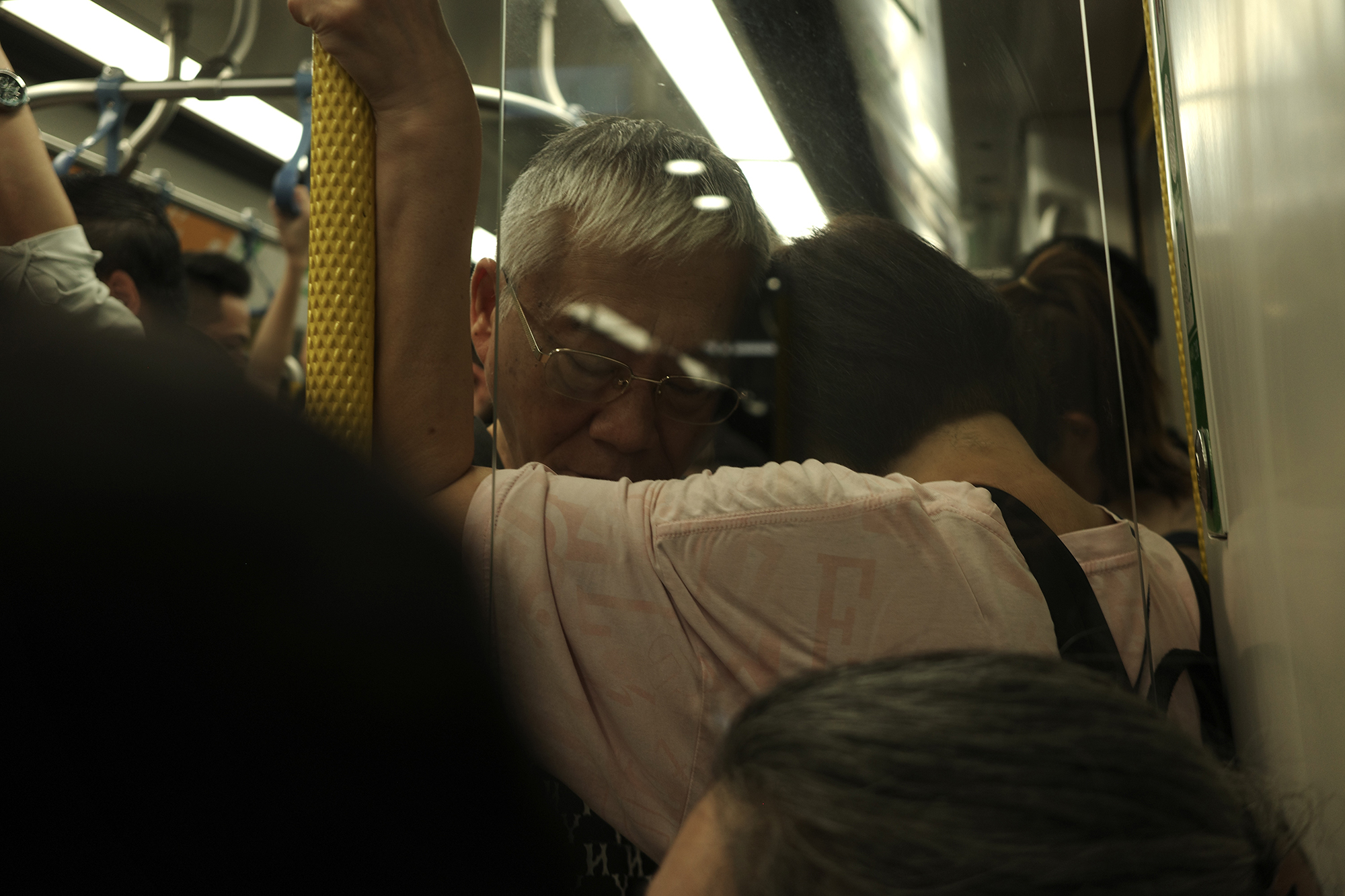
This photo perfectly illustrates everyday city life and the exhaustion it can bring. Despite the noise of the subway and the crush of the crowd, this shot inspires a great sense of serenity. The intimacy between these two people creates a bubble that shields them from their surroundings. The glass they are leaning against further accentuates this feeling of privacy. Even with the similar color tones, the opposition between the surrounding hustle and their inner calm creates a striking contrast. -
Joel Din
(Canada)
GR
Judge's comment
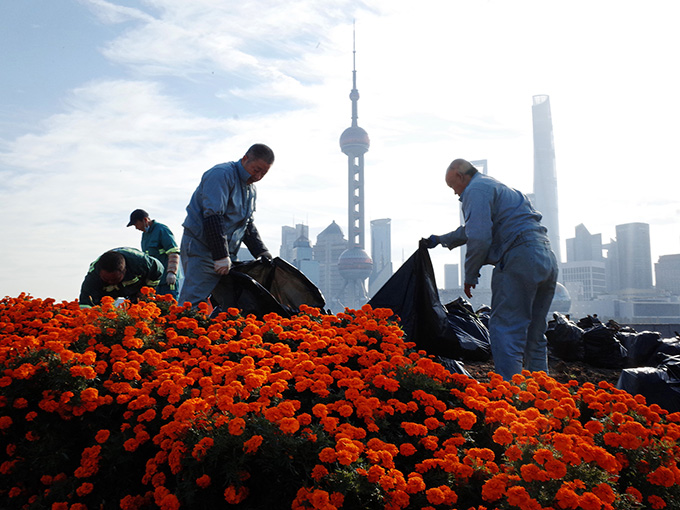
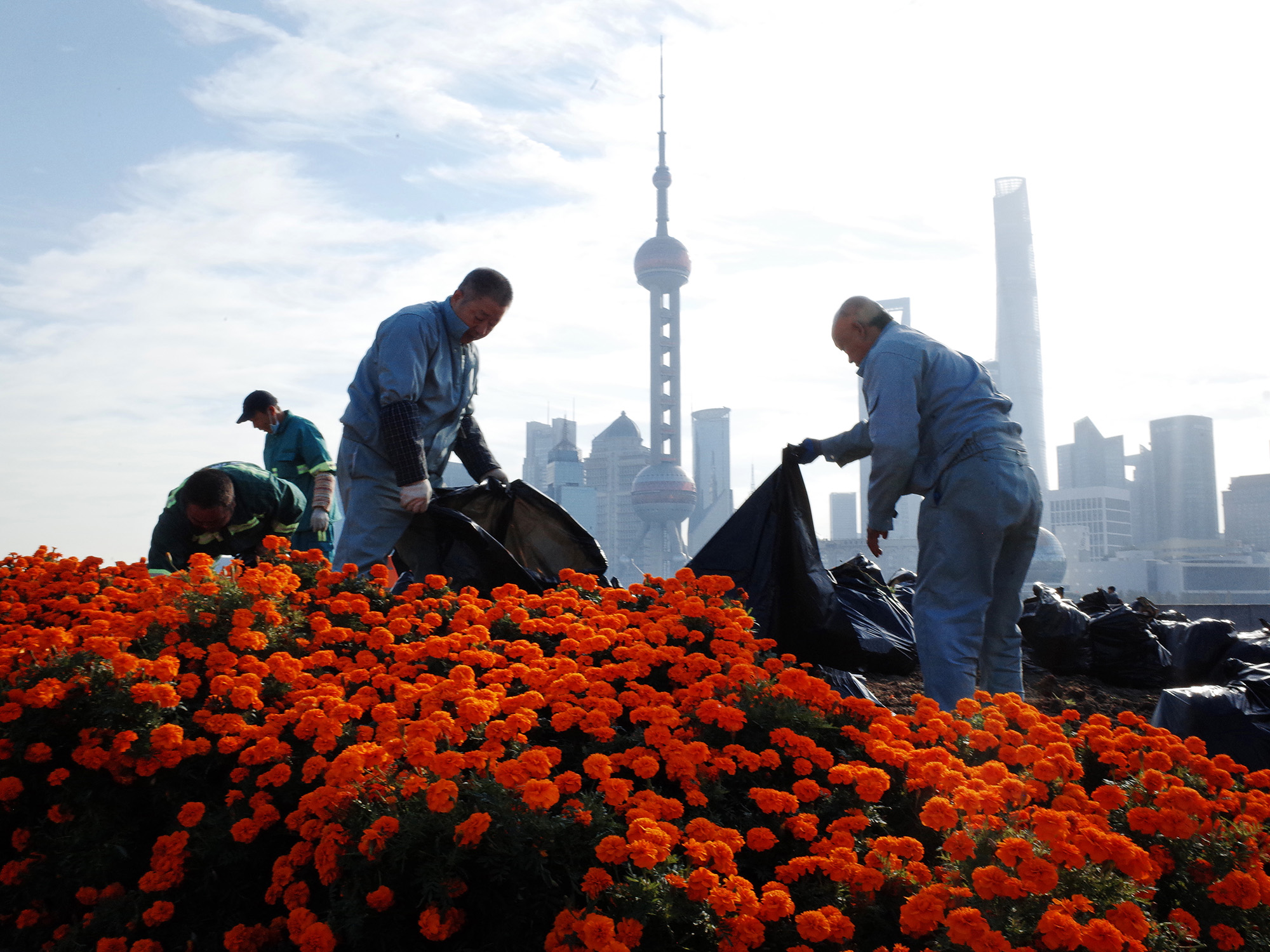
This shot is all about contrast. There is the contrast between the wealth embodied by the skyscrapers framing the background and the grueling work of those collecting bags full of waste. The tonal contrast between the subjects in silhouette and the bright background. And the contrast between the beauty of those vibrant, saturated flowers and the dark, dull trash right beside them.
It captures the reality of globalized metropolises perfectly.
-
Duc Dang
(Vietnam)
GR DIGITAL II
Judge's comment
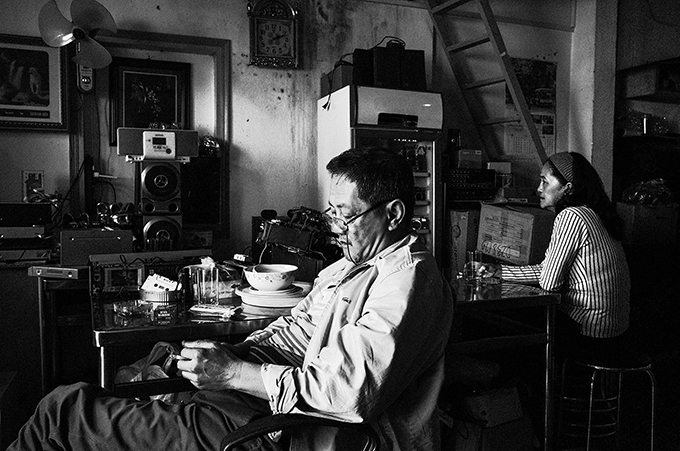
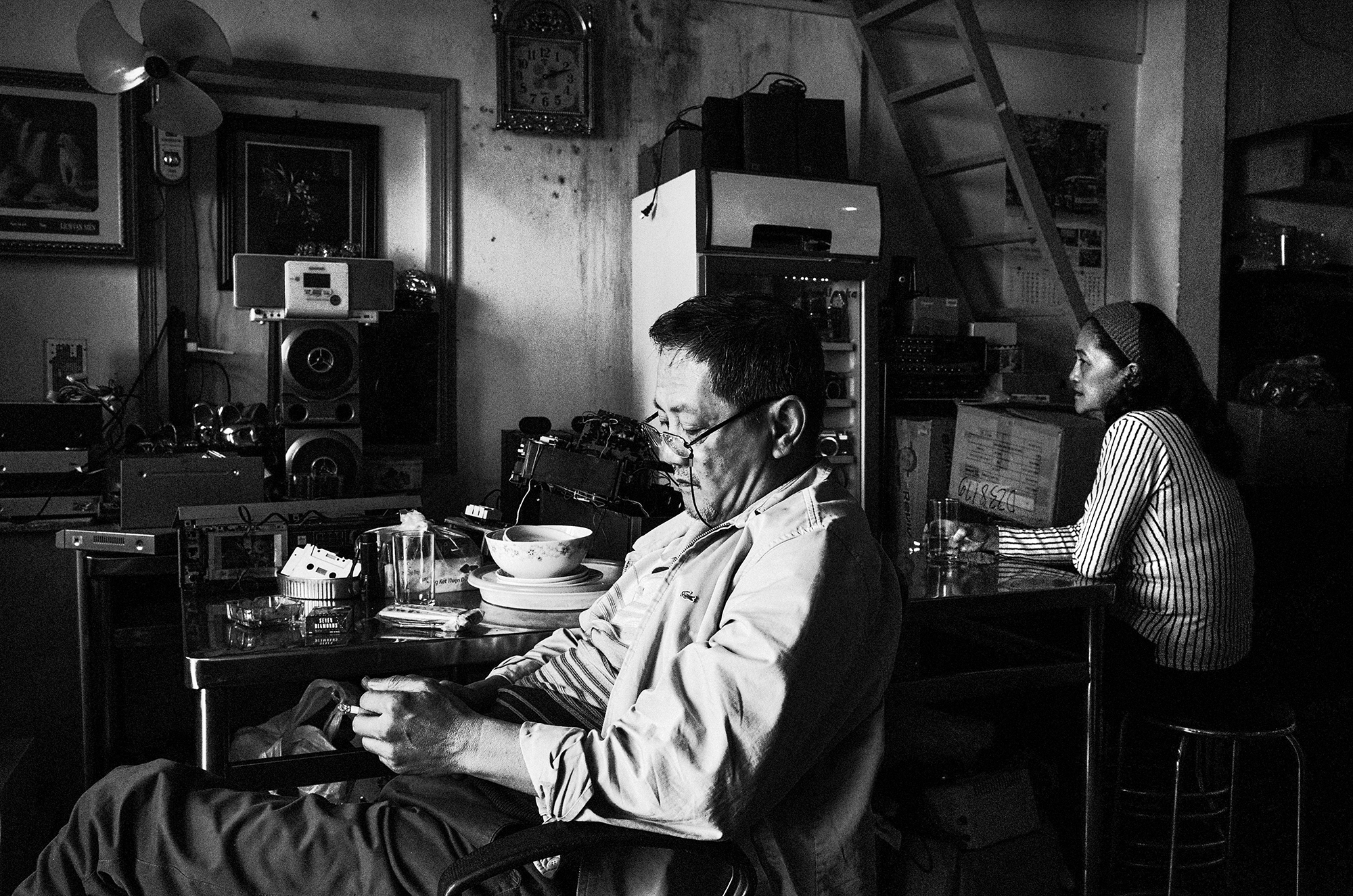
Beautiful expression of the everyday as sacred. It is intimate and grounded. Structurally, I am immediately drawn to the brightly-lit gentleman at its core, and then the broader scene gently unfolds — first to the lady at the table, then to the various groupings and collections of objects. Are they companions? Do they both live here? Do they share a love of music? Is the silence between them in this moment peaceful or tense? I feel like I am an ignored houseguest, and I like it; there is a true vulnerability to allow being seen like this in private life. The lighting and composition invite contemplation; the dishes occupy the foreground with the man who initially anchors the frame — and the woman, while seeming to recede into the background at first glance, is the one looking up and gazing upon the scene. Is this her story? The emotional resonance of this one stays with me even after I look away. -
人性
(China)
GR III
Judge's comment
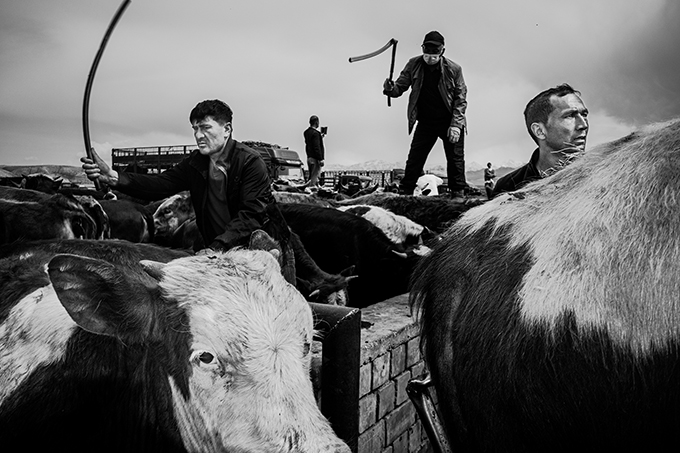
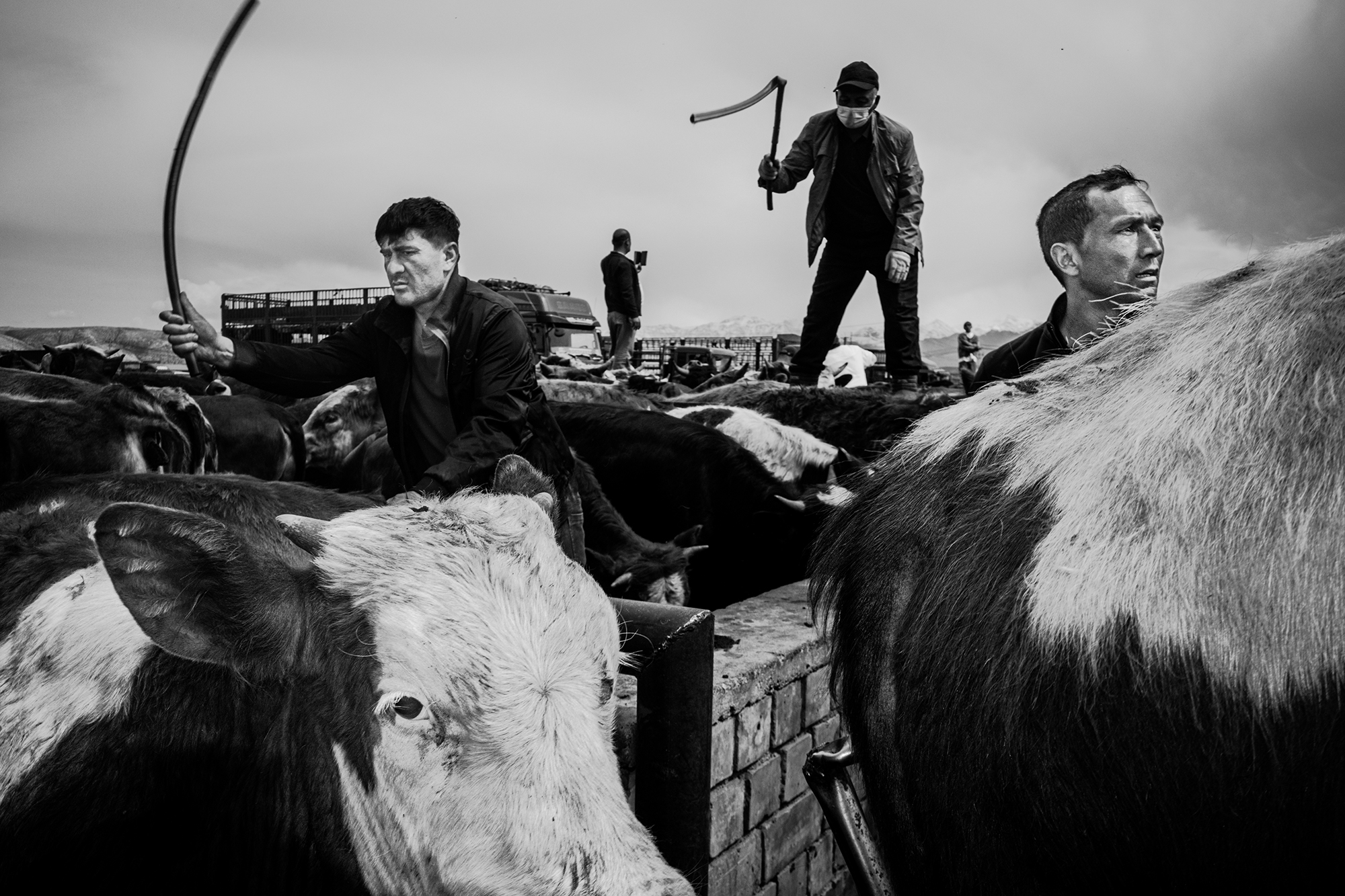
Brilliant motion and energy — it is both ancient and modern. It feels like an interrupted (versus decisive) moment, as though I've been dropped into the scene. Visceral. I can almost hear it. The dynamic composition works even at small size or great distance. What makes it especially strong is that everyone in it is a central character of sorts, from the animal in the foreground to the distant figure against a mountain range. The layers do powerful work. The eye is guided across the frame, shifting from one figure to the next. Its timelessness is also true to this moment, made so by the details once one zooms in — the face mask, the baseball cap, and what is likely a mobile phone in hand. I also start to wonder who I am as an observer in the photo; am I human or part of the herd? -
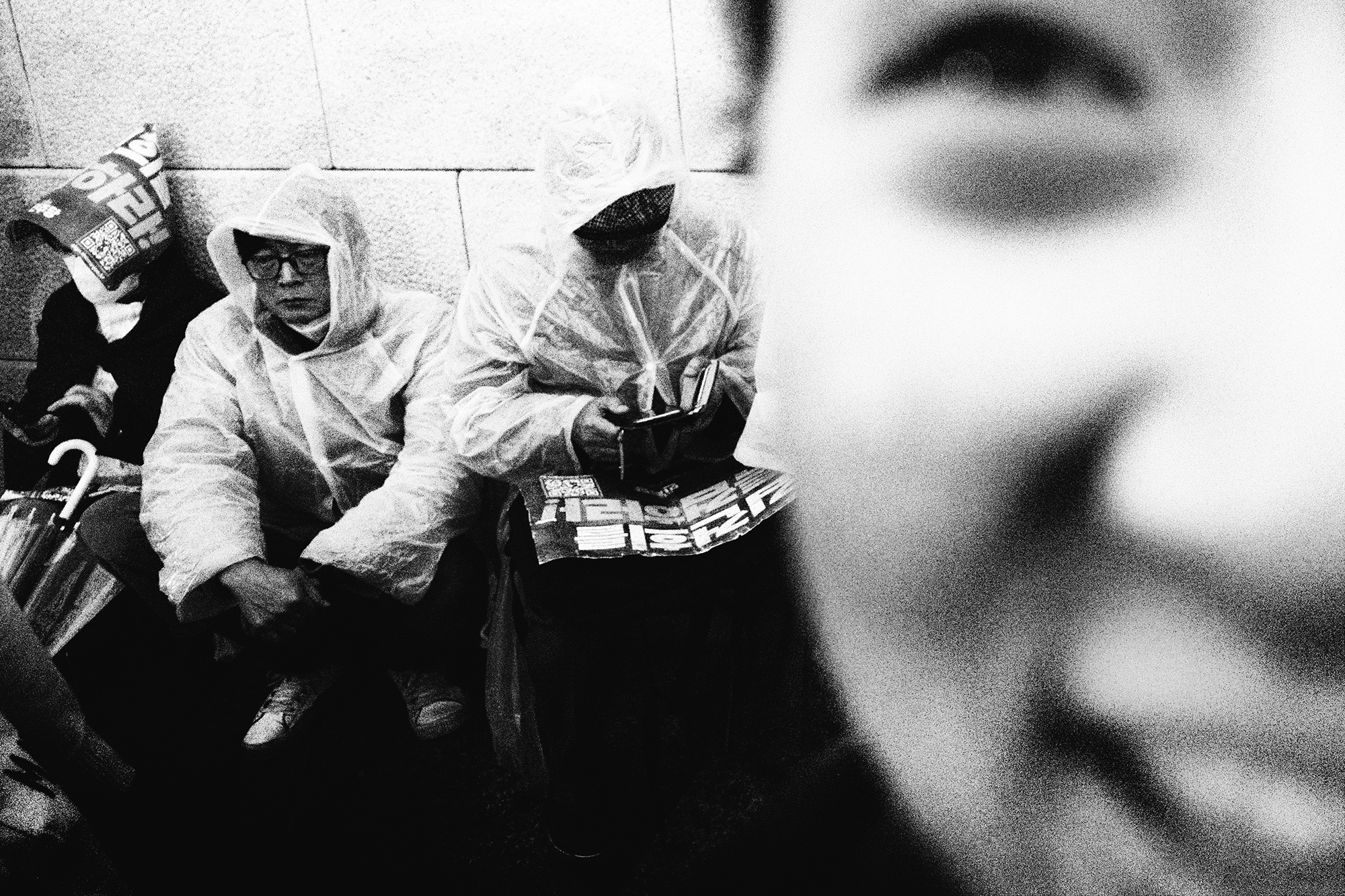
Jorge Merino Alonso
(Spain)
GR III
Judge's comment
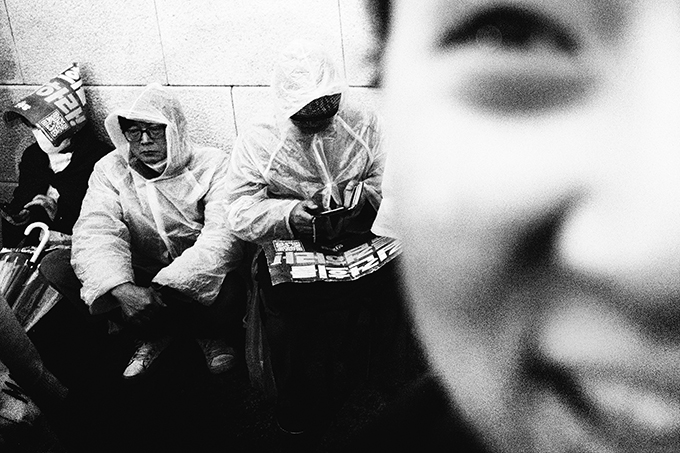
Striking contrast and tension — visually and emotionally. Between personal and public, youth and adulthood, joy and struggle, energy and exhaustion, individual and society. The viewer's eyes move between the figures — imagining their days, what happened this day, and how this moment came about. It takes the global lingua franca of the blurred selfie and quickly turns it into the story of a place and time; how our daily lives are lived against history. How our daily paths and routines regularly intersect with those living wildly different experiences. The horizontal composition belies the selfie trope, with the subject as author, inviting us into the moment. It is unexpected, jarring even — in the best possible way. Deeply human and curious.
-
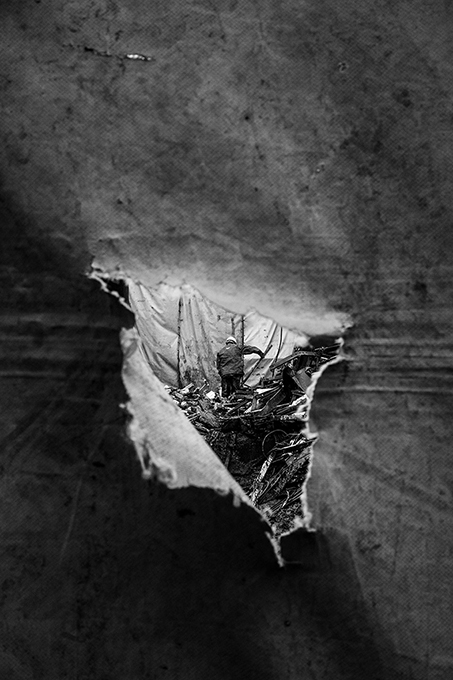
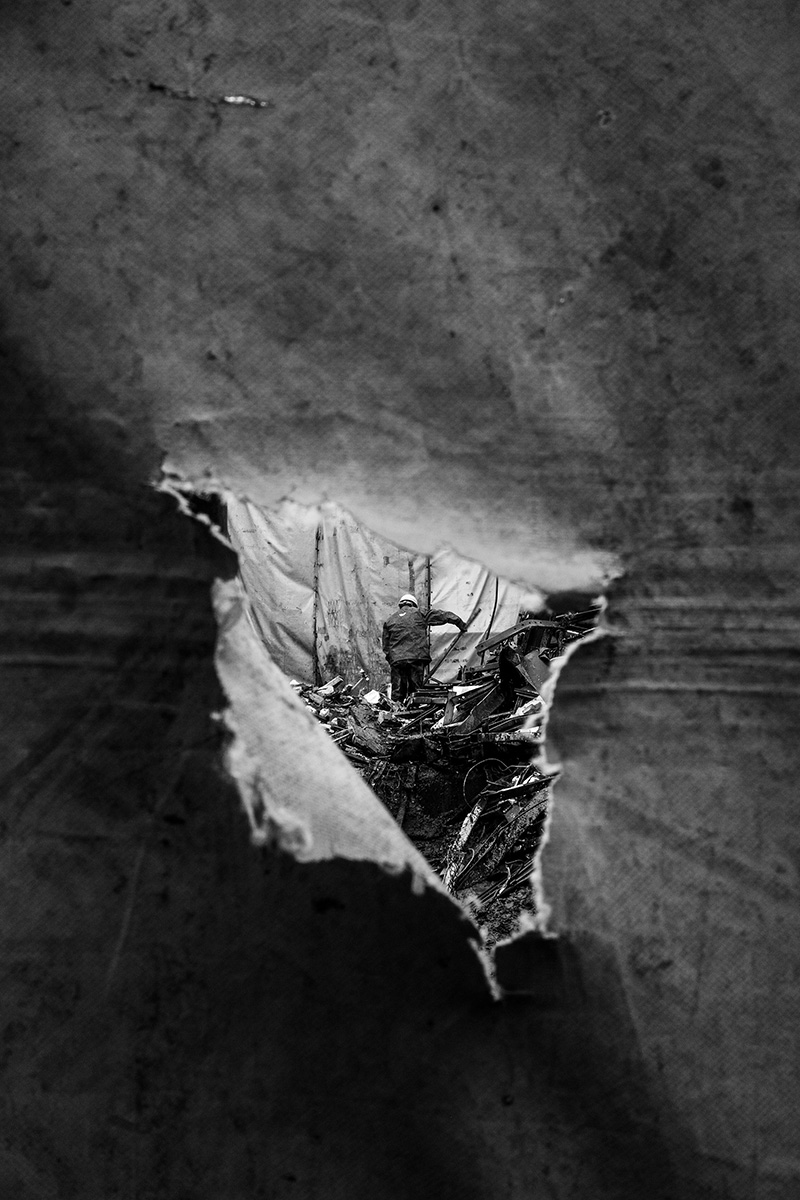
Taisho Matsuguma
(Japan)
GR IIIx
Judge's comment
This photograph uses a “hole in the wall” perspective that gives it a raw, gritty atmosphere. The worn texture of the tarp highlights a sense of age and hardship, and the way it frames the lone worker in the yard adds strong emotional weight to the image. The composition feels dark and moody, with a perfectly candid, in the moment feeling, as if you accidentally discovered a hidden scene and captured it before it disappeared. It tells a quiet story and reminds the viewer that meaningful moments are often happening unnoticed around us, and if we’re not paying attention, we can easily miss them. -
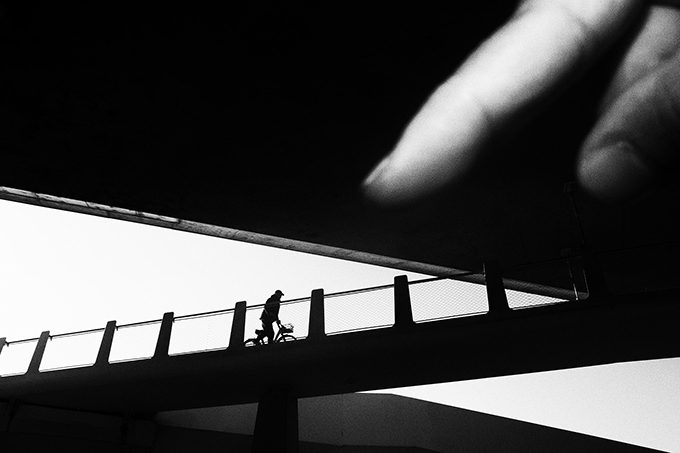
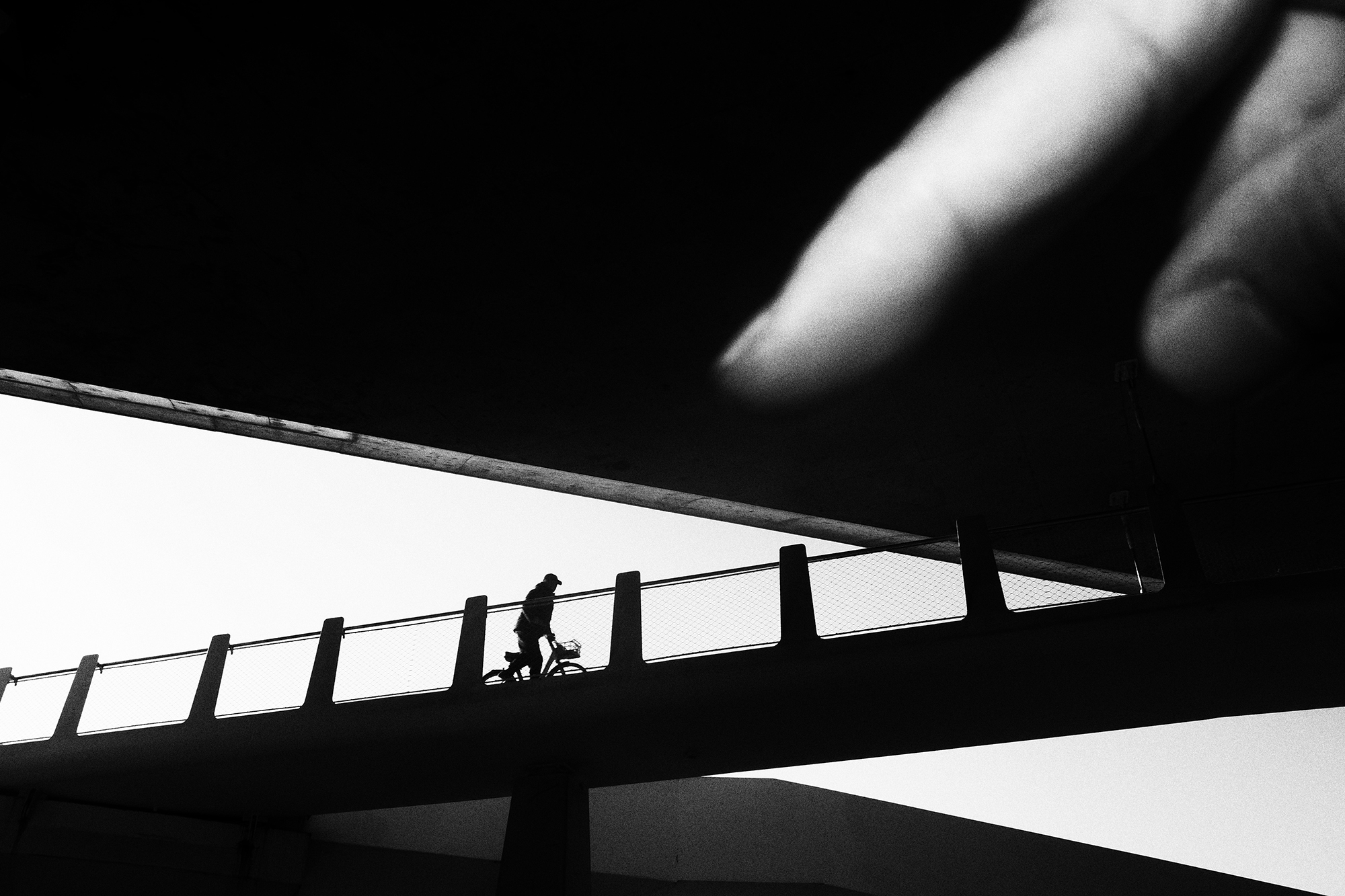
马克没网名
(China)
GR IV
Judge's comment
This photo really stood out to me, I’m a big fan of high contrast black and white work. The silhouette of the cyclist against the bright background, combined with the strong bridge lines, makes the frame feel graphic and unique. The pointing finger toward the passing cyclist adds an extra layer of depth and a clear focal point, giving the moment more intention and storytelling. -
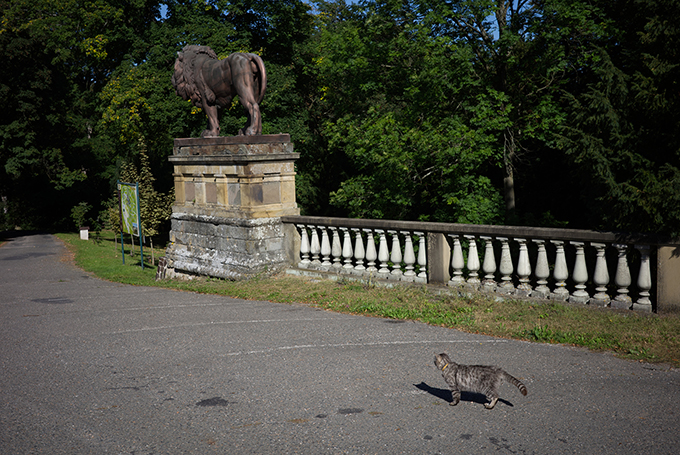
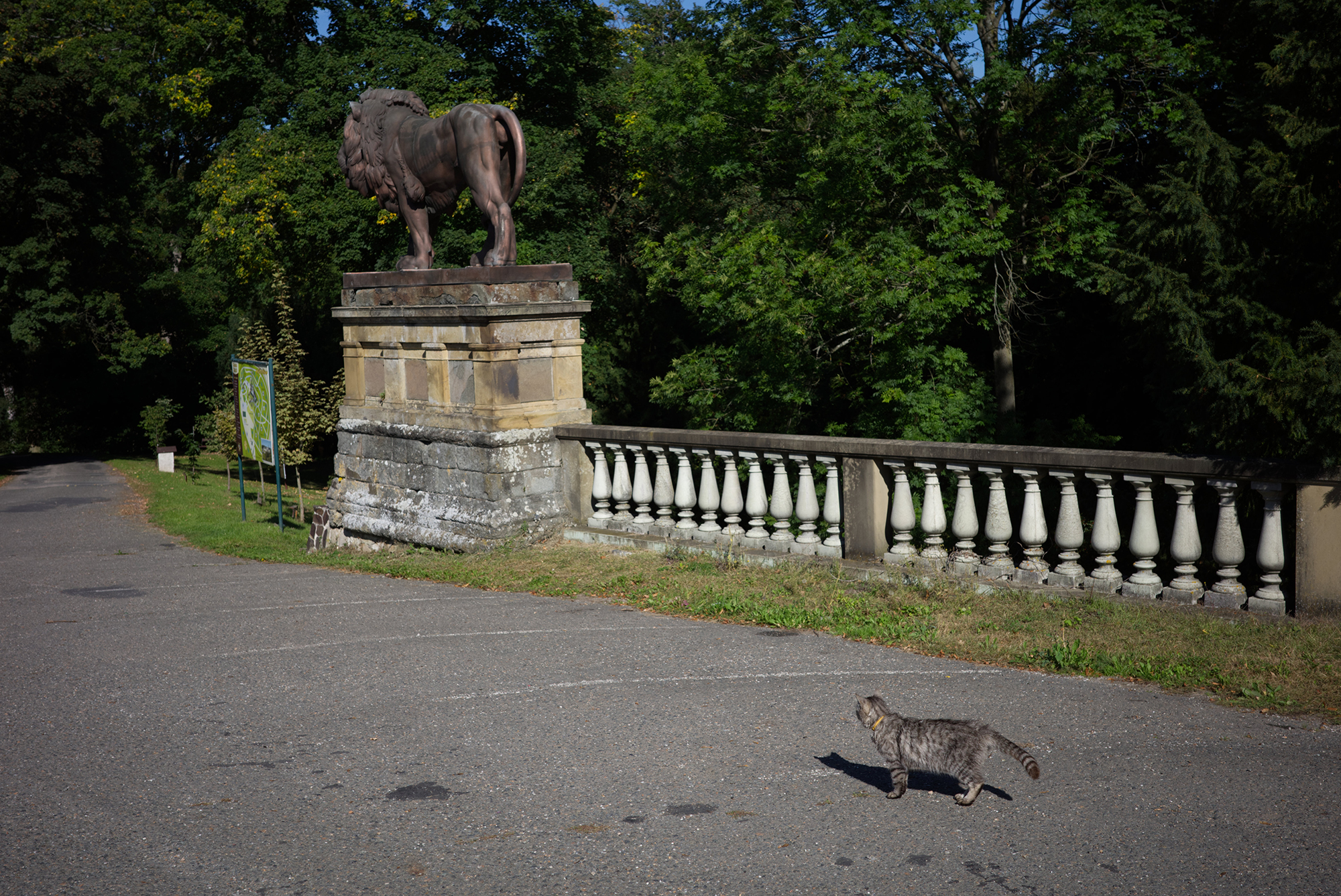
Miroslav Slapka
(Slovakia)
GR IIIx
Judge's comment
This photograph beautifully captures a perfect moment of daily life, using scale and symbolism to tell a story.
The lion statue in the background and the small cat crossing the frame feel deeply expressive to me. The contrast in scale and perspective shows how something small and ordinary can still hold its own importance within a larger, more imposing environment.
It also shows a story in which the cat is trying to build its confidence by mimicking a dominant animal like a lion.
-
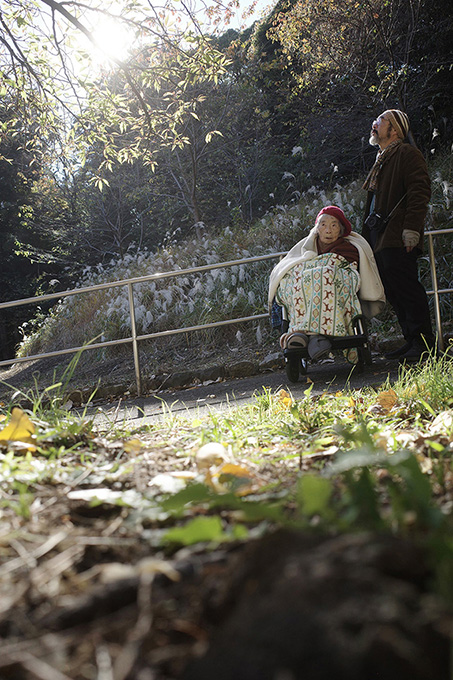
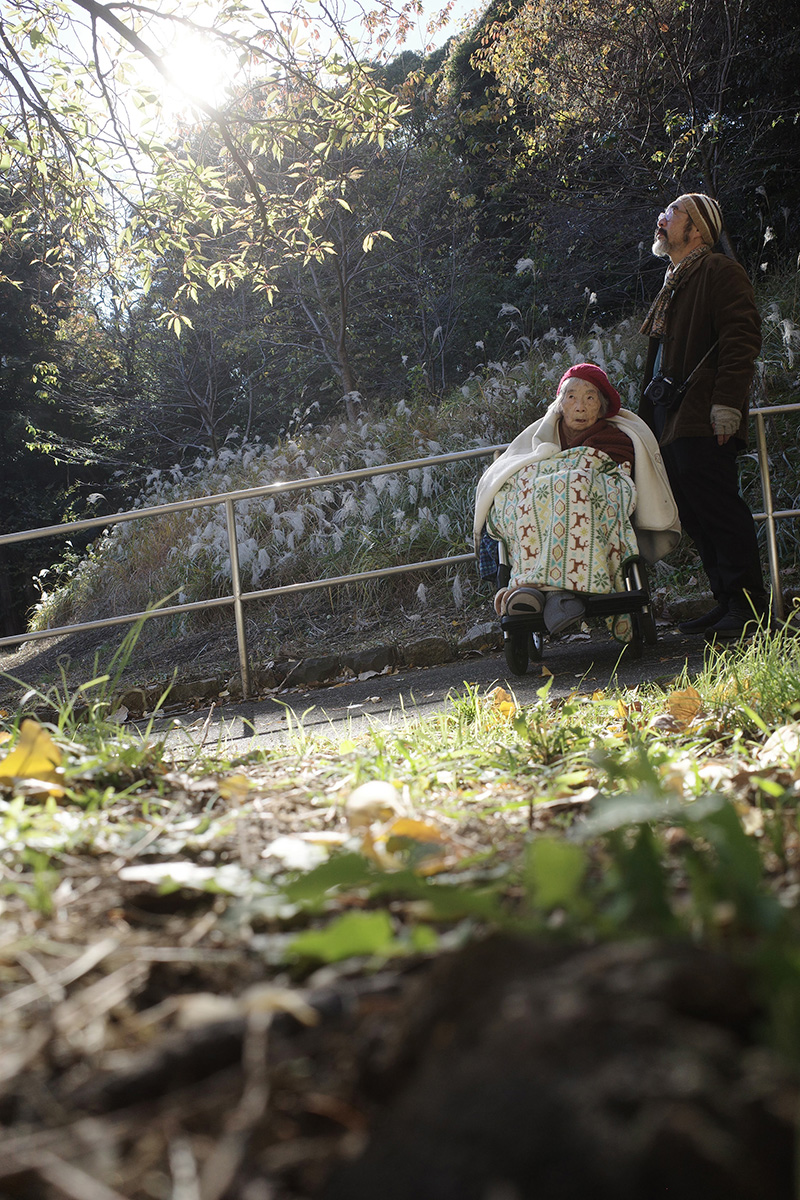
Mikio Tamura
(Japan)
GR III HDF
Judge's comment
Before anything else, my eye settles on a simple question: who might be photographing from within the bushes?
From the two accompanying images, one senses that the photographer is quietly recording everyday moments shared with a mother—moments that feel increasingly precious and perhaps limited. Pausing midway up the slope, the camera is set down, and the elderly mother gazes somewhere beyond the frame, her eyes unfixed.
In the evening light, the two figures stand in a stillness that seems to embrace time itself. A long, deeply personal story—known only to them—unfolds and expands within the photograph, gently wrapped in soft backlight. -
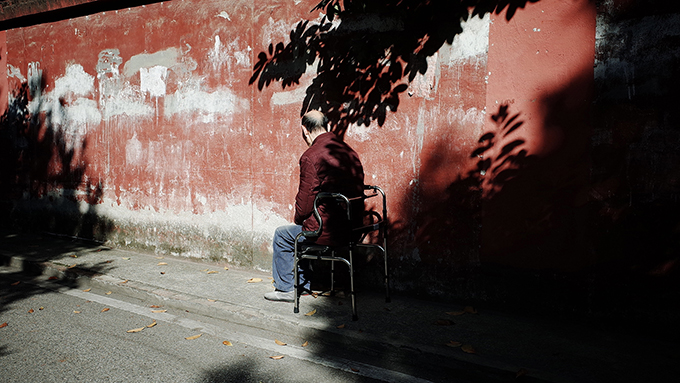
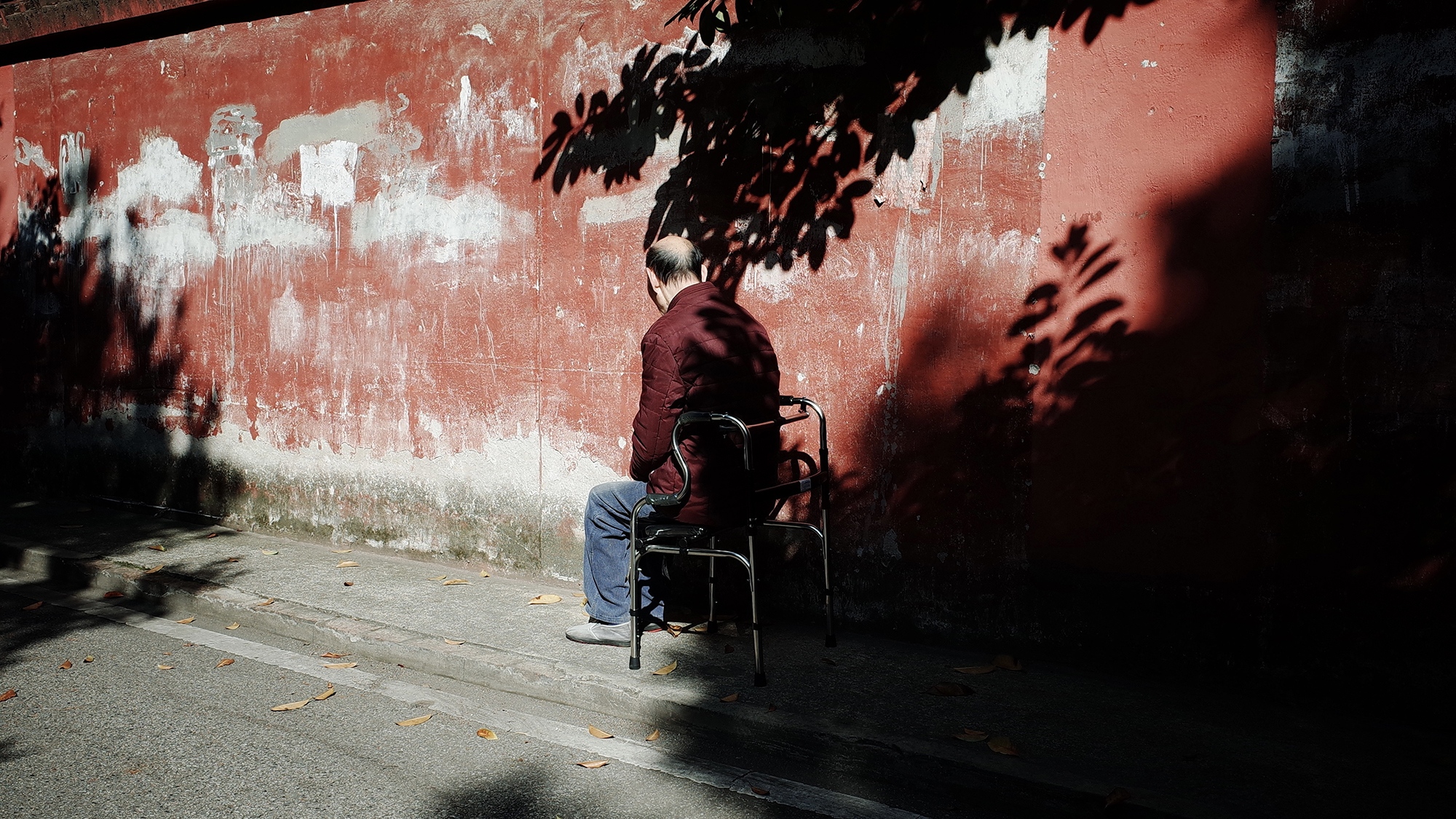
肆拾贰
(China)
GR II
Judge's comment
My attention is first drawn to the deep shadow of a tree cast sharply against the red wall, stretching toward the figure seated at the center as if it might swallow him whole.
Why does he sit so closely against the wall?
Looking more carefully, I notice that the chair is attached to a walker. Perhaps he has made his way here and is pausing to catch his breath. On this narrow sidewalk, is he unconsciously pressing himself against the wall so as not to obstruct others? And what lies beyond the direction of his gaze?
The striking contrast between the red wall and the dark shadows quietly brings his presence into focus, transforming the scene into something difficult to forget. -
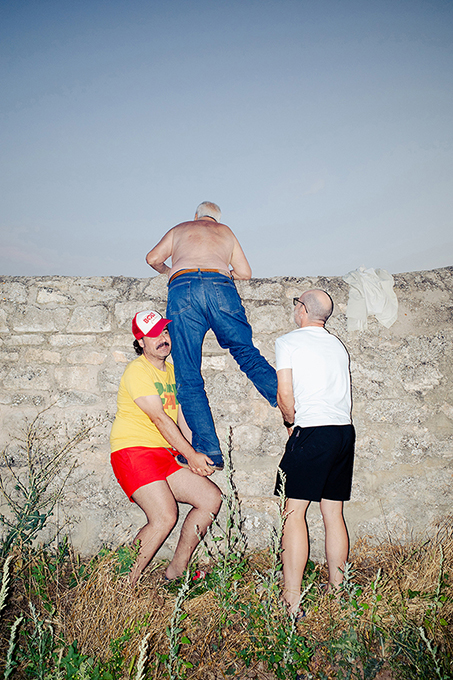
Rasmus Norrbygård
(Sweden)
GR III
Judge's comment
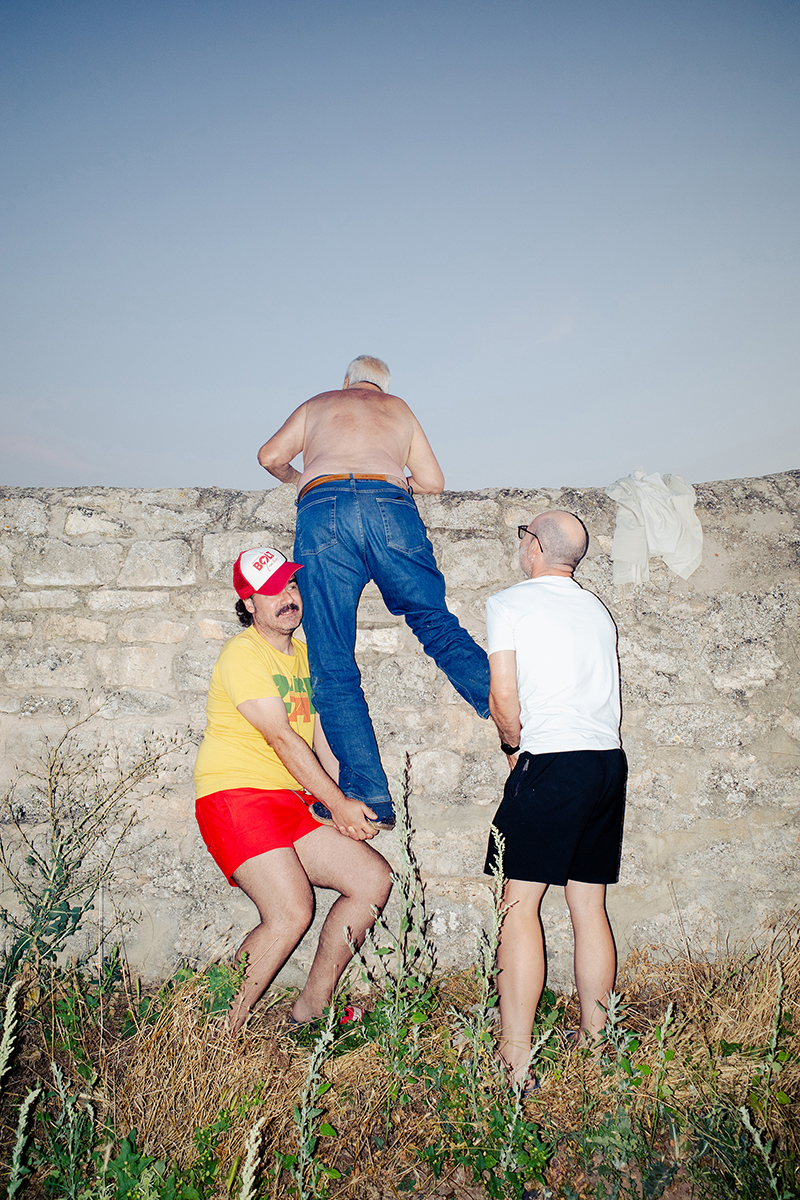
The vivid contrast between the wall, rendered almost white through daylight sync flash, and the ice-blue sky above immediately stands out. This sharp opposition brings into focus the three figures attempting, somehow, to make their way over it.
As my gaze moves across the scene and I begin to imagine their relationship and the circumstances surrounding them, I find myself wondering: did the man at the top remove his shirt so as not to soil it? The expressions of the two supporting him suggest not urgency, but a faint sense of absurdity.
With the freedom and immediacy characteristic of snapshot photography, this image captures the quiet humor and humanity that lie hidden within an ordinary moment.
-
Jonald Galvan Arcasitas
(Canada)
GR
Judge's comment
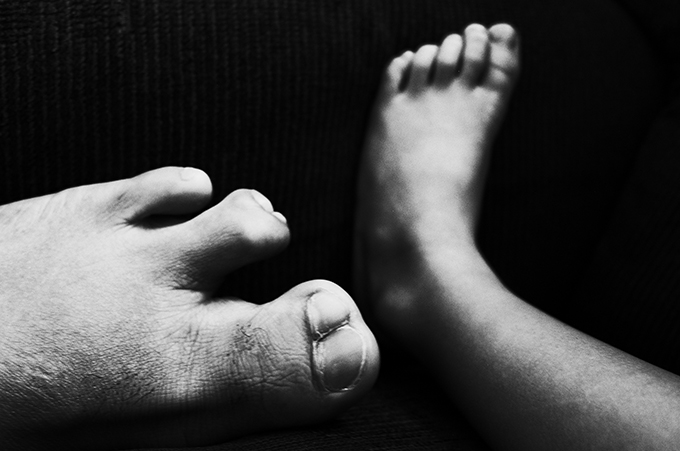
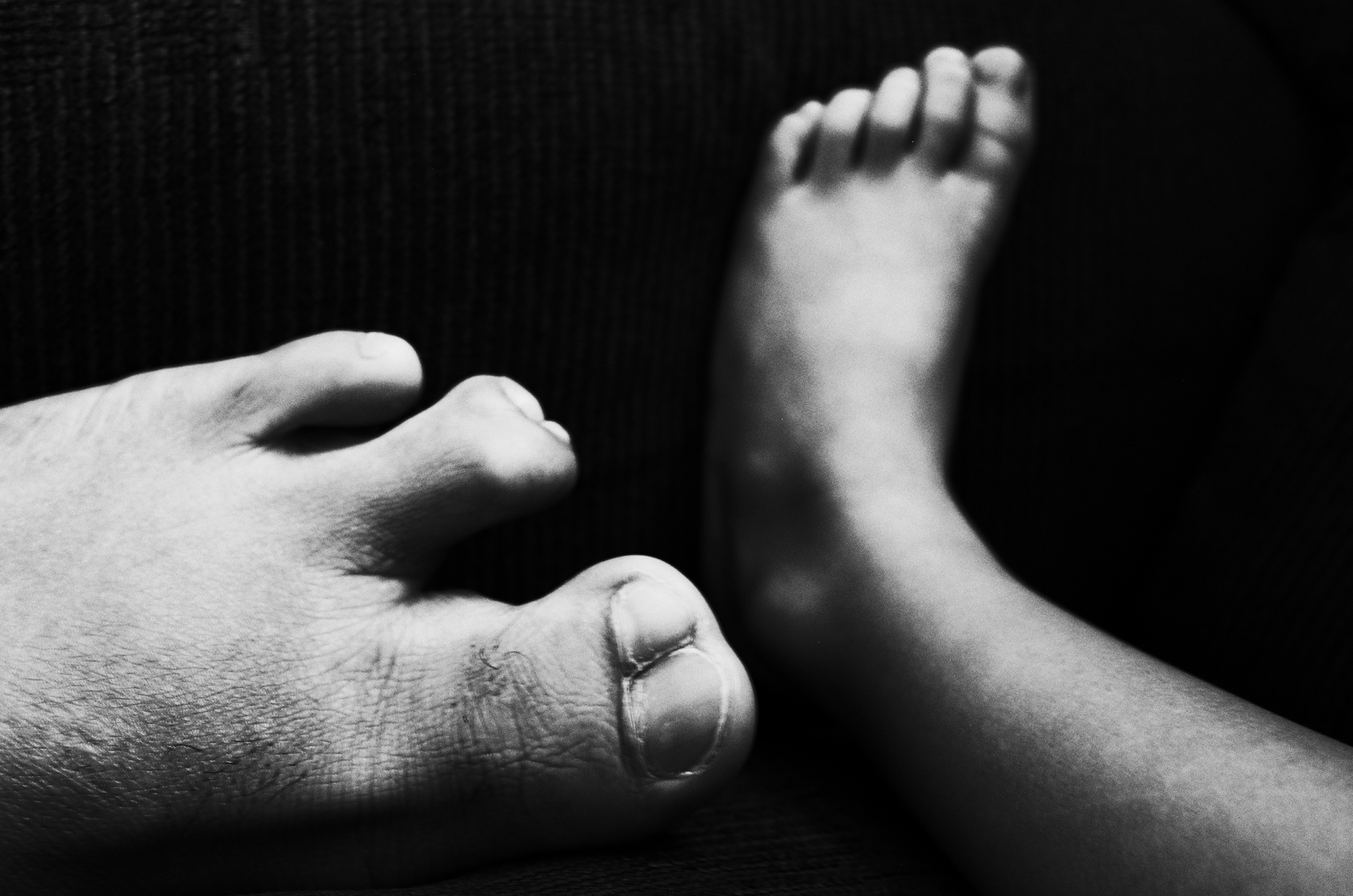
This photograph offers a thoughtful and restrained interpretation of everyday life, choosing intimacy over spectacle. Rather than depicting a bustling environment or a recognizable place, the photographer focuses on the human body itself, using anatomy as both subject and metaphor. The close framing of two feet in black and white encourages slow looking, transforming an ordinary detail into a quietly powerful reflection on what it means to be human in daily life. The image’s strength lies in its subtlety. Light and shadow are carefully balanced, revealing texture and form without idealization. The tonal range feels intentional, lending the photograph a sense of calm gravity. A slight asymmetry between the feet introduces complexity and emotional tension, hinting at difference without explanation or exaggeration. This ambiguity allows the viewer to engage more personally, bringing their own understanding of physicality, vulnerability, or lived experience to the image. Importantly, the photograph avoids sensationalism. The body is presented with dignity and respect, not as an anomaly but as an integral part of everyday existence. In doing so, the work broadens the definition of daily life to include subtle, often overlooked realities that shape how people inhabit the world. This is an image that rewards patience. Its impact builds gradually, revealing how something small and seemingly ordinary can carry profound meaning. The photographer demonstrates confidence in understatement, allowing quiet observation to communicate humanity with clarity and depth. -
Mama Ralte
(India)
GR IV
Judge's comment
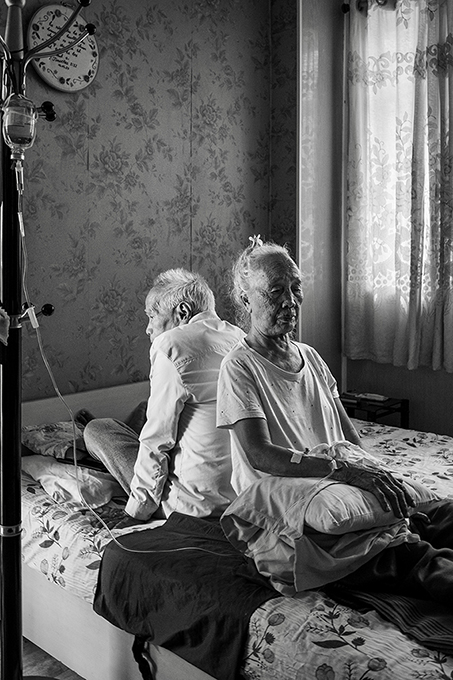
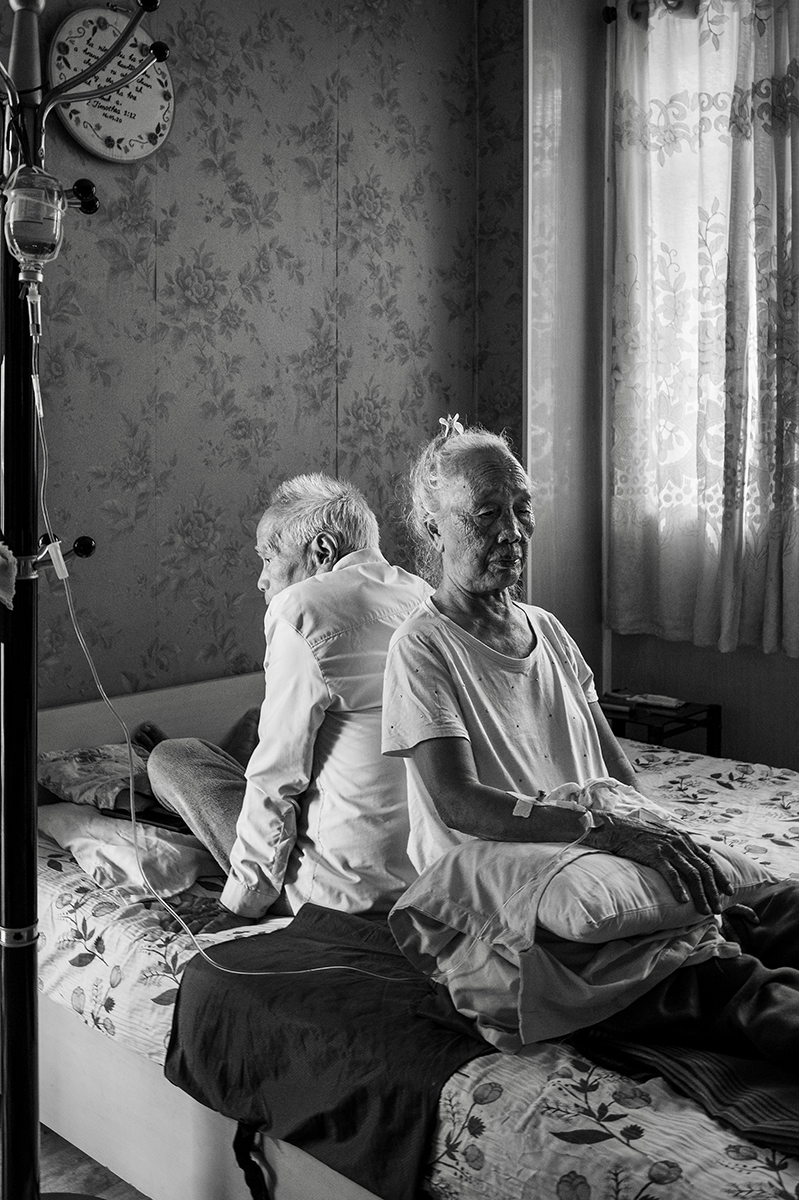
This photograph approaches daily life through the quiet gravity of time, aging, and shared presence. Set within an intimate domestic space, the image observes two elderly figures seated back-to-back on a bed, their bodies close yet oriented inward. The scene is spare but emotionally layered, allowing the viewer to sense not only the passage of years but the recalibration of priorities that comes with it—health, rest, and mutual endurance. The composition is carefully balanced. The bed becomes both literal and symbolic ground: a place of recovery, reflection, and routine. The IV stand and clock quietly anchor the photograph in the realities of care and time, yet they are not foregrounded as spectacle. Instead, they function as contextual markers, reminding us that daily life, particularly later in life, often revolves around maintenance rather than momentum. Light filtering through the window softens the scene, lending a contemplative stillness that resists drama. What is most compelling is the emotional restraint. The photographer does not frame aging as decline or crisis, but as a lived condition—complex, intimate, and shared. The figures are connected not through gesture, but through proximity and parallel stillness. Their mirrored posture suggests a form of meditation, whether intentional or circumstantial, shaped by long familiarity and mutual understanding. This image expands the idea of everyday life beyond activity into endurance and care. It acknowledges that daily rituals change over time, and that moments of rest, recovery, and quiet companionship can carry profound meaning. The photograph’s strength lies in its empathy and patience, offering a dignified portrayal of health, aging, and the understated beauty of experiencing life alongside another person. -
藍梵寺泊
(China)
GR IV
Judge's comment
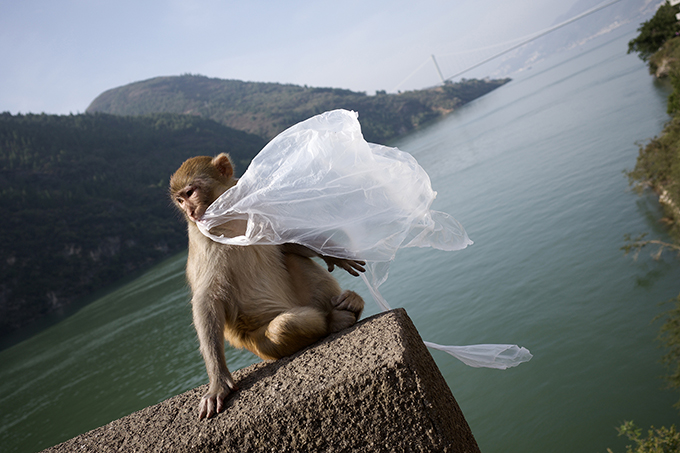
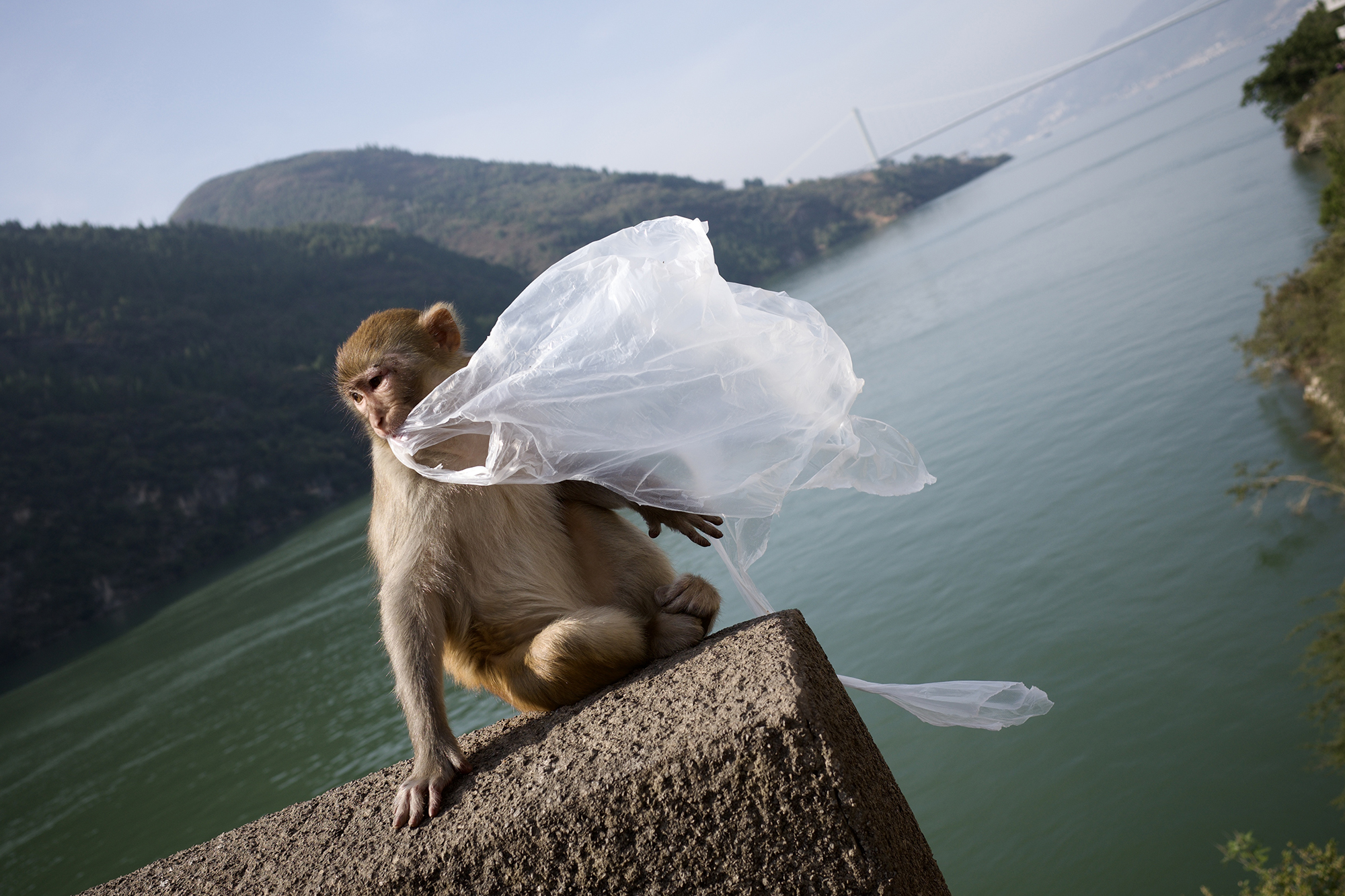
This photograph confronts the viewer with an uneasy, sharply observed intersection between the natural world and human intervention. At first glance, the image reads as almost lyrical: a monkey perched against a sweeping landscape, framed by water and distant hills. Yet the presence of a translucent plastic bag caught at its mouth immediately disrupts any sense of pastoral calm. The tension between beauty and intrusion is where the photograph asserts its strength. Compositionally, the photographer makes an astute choice to work close while maintaining environmental context. The elevated vantage point and diagonal horizon introduce instability, subtly echoing the imbalance the image describes. Light is clean and direct, rendering both fur and plastic with equal clarity—an intentional visual equivalence that refuses to let the artificial object recede into the background. The plastic becomes impossible to ignore, not as spectacle, but as consequence. Timing is crucial here. The photograph captures a fleeting, unscripted moment in which the animal appears neither alarmed nor aware of the symbolic weight imposed upon it. This neutrality is what gives the image its editorial force. Rather than moralizing, the photographer allows the scene to pose its own questions about contamination, adaptation, and responsibility. In keeping with a quiet, observational approach, the image reflects a practice rooted in attentiveness rather than intervention. It acknowledges humans as an invasive presence without dramatization, trusting the viewer to sit with the discomfort. The result is a photograph that feels both immediate and reflective—an image that lingers not because it is shocking, but because it is unsettlingly ordinary.
-
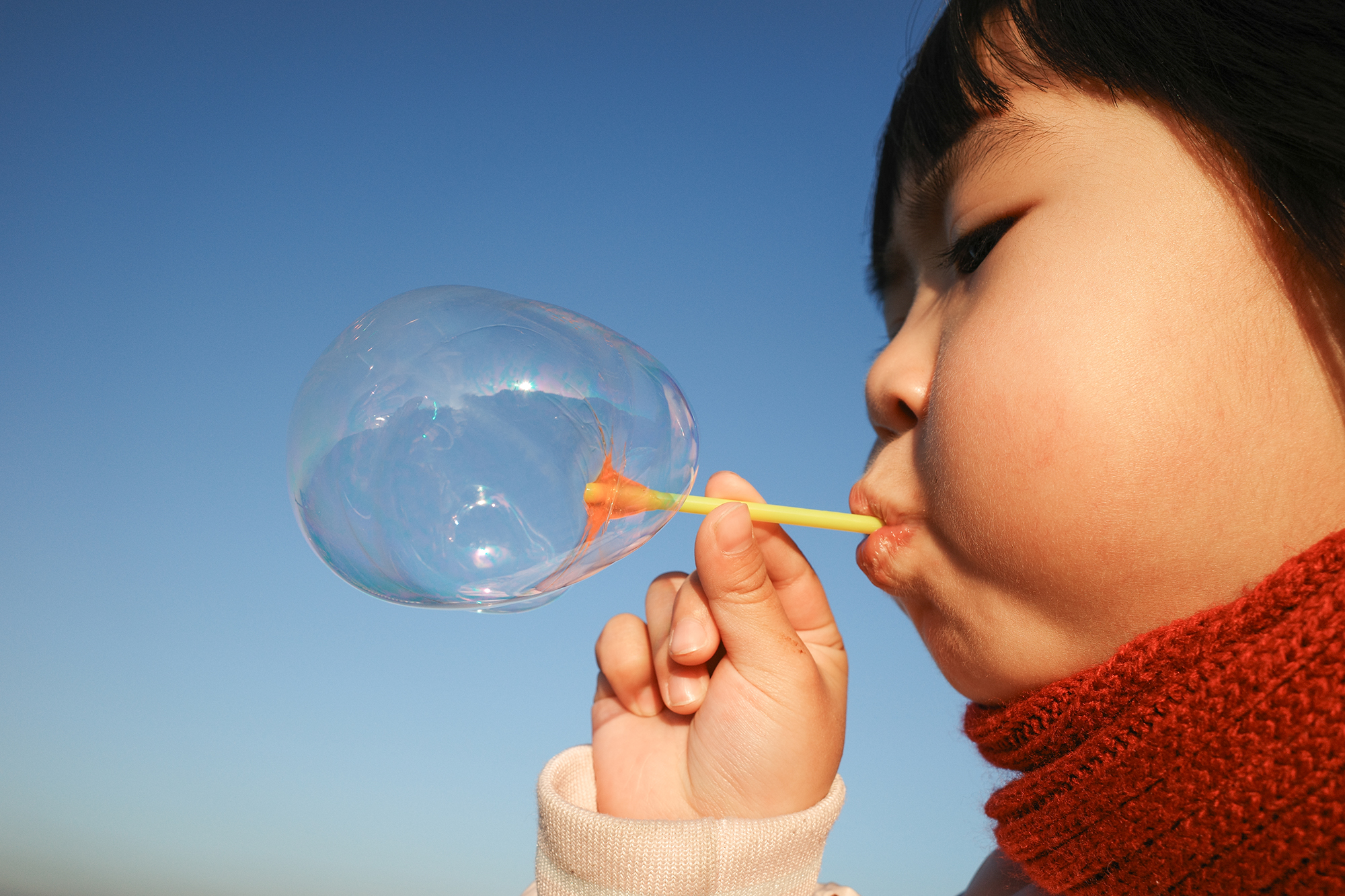
BuBu家庭摄影
(China)
GR III
Judge's comment
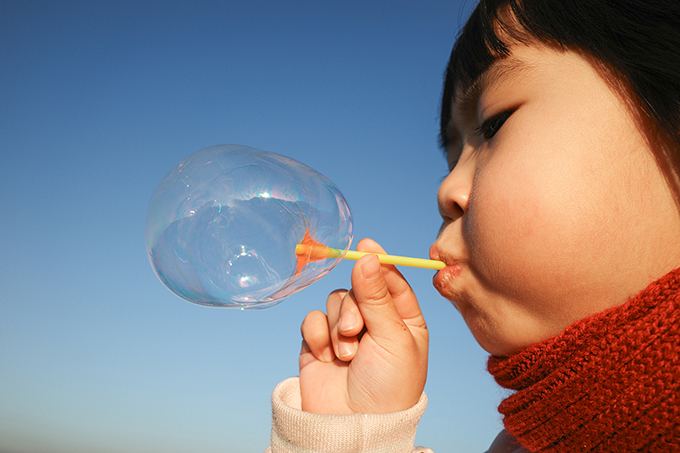
This image feels playful and light at first glance. A child, a bubble, a blue sky, and nothing else competing for attention. But the longer you look, the more the image slows you down. The bubble probably exists for only a second, fragile and temporary. The child seems to know this, yet still blows it carefully, fully present in the act. It is a small gesture, but it holds a strong sense of time passing.
This is a moment many of us see in daily life, but rarely stop to frame with such restraint. The photograph does not rely on tricks, spectacle, or cleverness. It stays simple, quiet, and patient. I love how the photographer chose awareness over drama, trusting that the moment itself was already enough. -
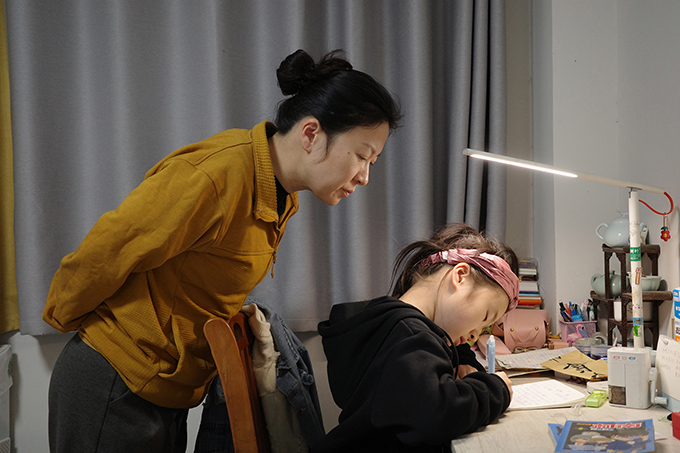
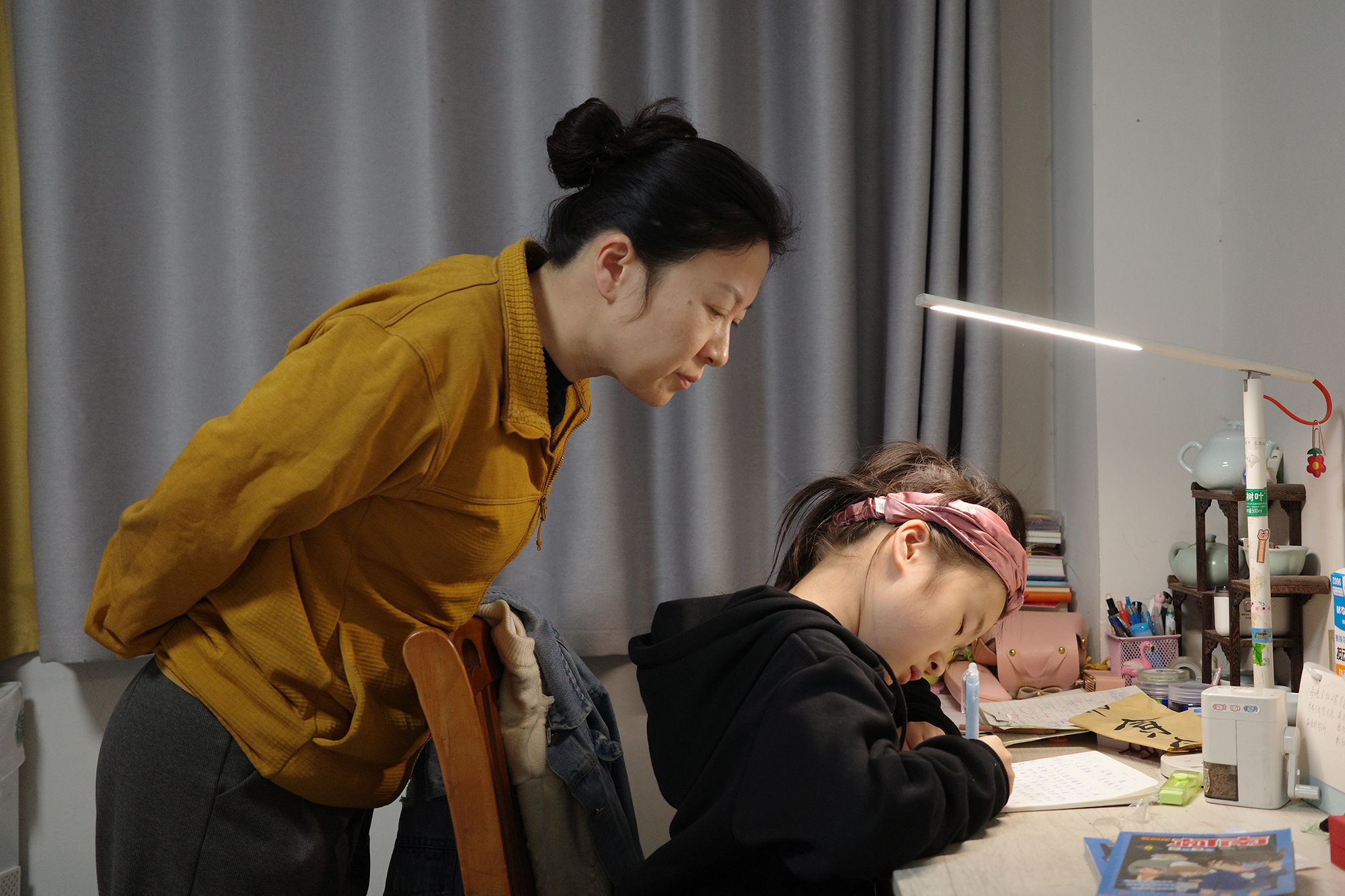
刘雷
(China)
GR IIIx
Judge's comment
This photograph feels deeply familiar. There are care, patience, and routine all in one small frame, without being emphasized or dramatized. Someone is watching over someone they love, not as a grand gesture, but as part of an everyday rhythm. It reminds me that daily life is made up of these small acts of presence that rarely get photographed, even though they shape who we are.
What also makes it beautiful to me is the closeness. The photographer is not standing at a distance or observing from a safe remove, but inside the moment, almost invisible, allowing the scene to unfold without interruption. Because of that, the image feels lived rather than captured, and that feeling stays with me. -
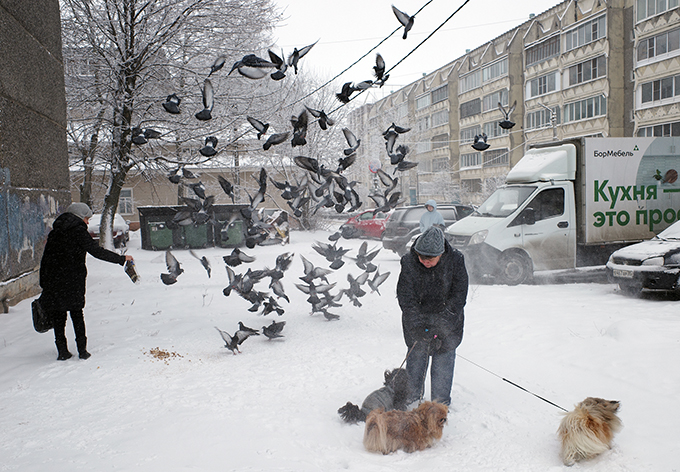
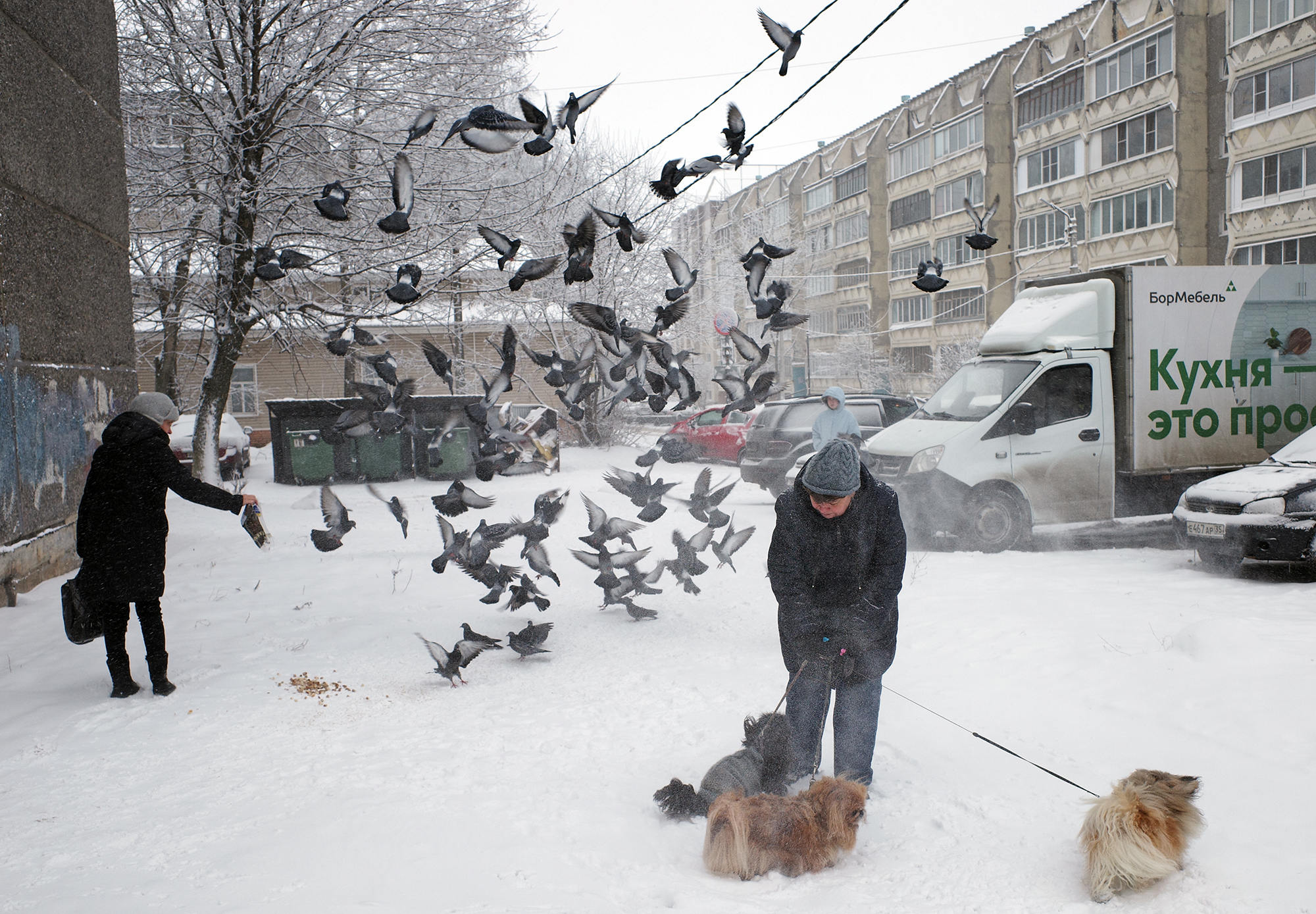
Slava Terebov
(Russian Federation)
GR III
Judge's comment
This is daily life as a shared space. Dogs being walked, birds taking flight, people moving through snow, doing what they need to do. Different routines crossing paths for a brief moment. Nothing here is arranged to impress, yet everything feels connected. The photograph holds that complexity without explaining it.
What I appreciate most is how the scene is not built around a single heroic action or a decisive instant. It is built around coexistence. Humans, animals, weather, and architecture all sharing the same slice of time, slightly messy, slightly unresolved. That is how daily life usually feels. We move through it together, often without noticing one another, yet constantly affecting the scene we share.
-
青乘
(China)
GR III
Judge's comment
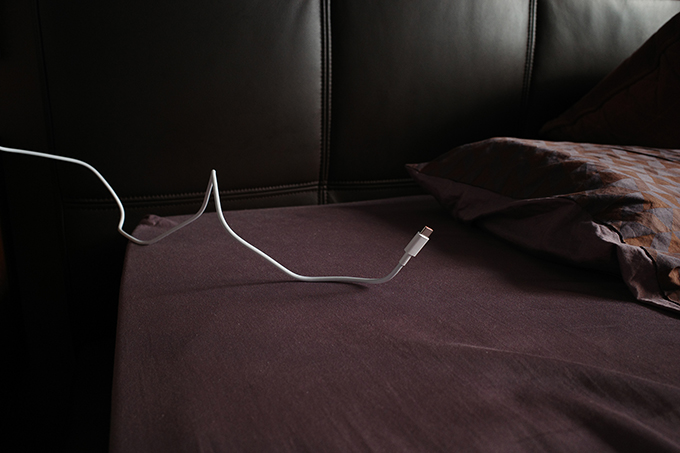
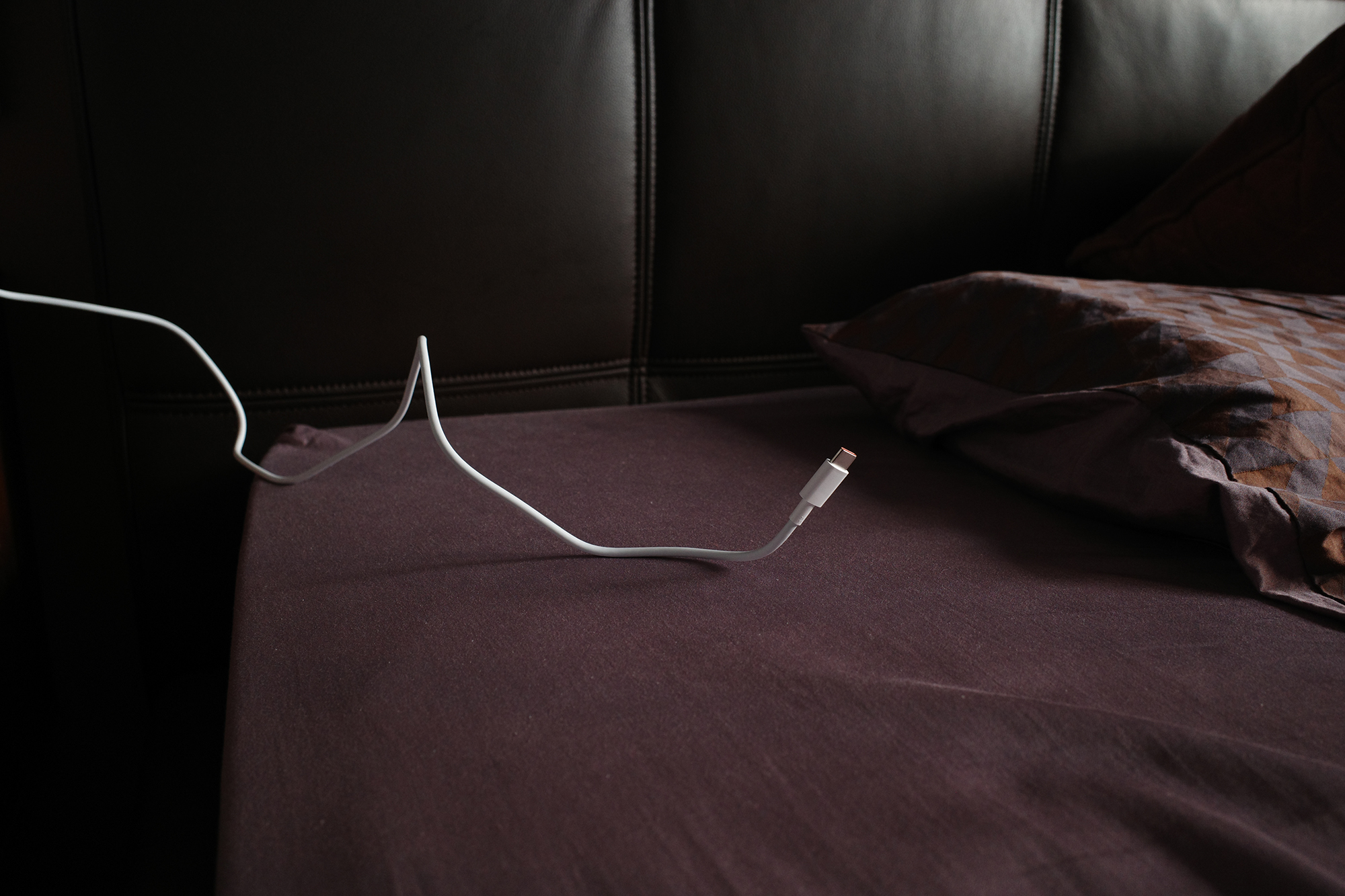
Every day, we find ourselves in a silent race with our smartphones — to see who will become exhausted first. Meanwhile, this playful charging cable waits patiently at the bedside, quietly anticipating the moment when we surrender and entrust our defeated phones to it.
The cable tip leaps into the frame, and from this angle, it appears almost lively and spirited. In contrast, the pillow — meant to “recharge” humans — looks lifeless and still, creating an intriguing juxtaposition.
This solitary charging cable stands as a portrait of our era. Through a simple, inexpensive, easily overlooked yet essential connection, it subtly reveals the fragility of modern existence. -
Suguru Akama
(Japan)
GR IIIx
Judge's comment
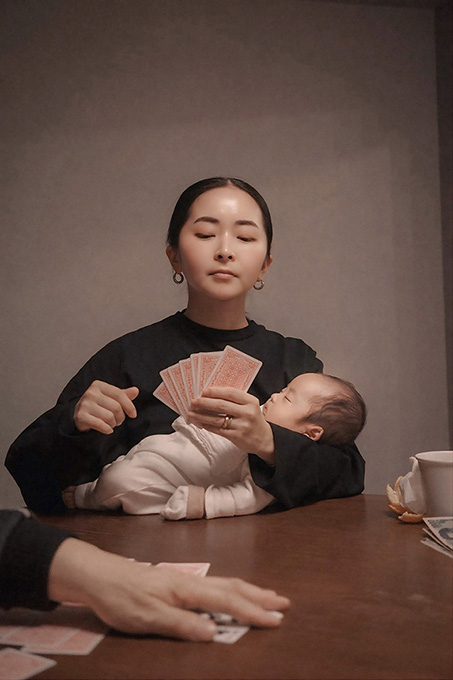
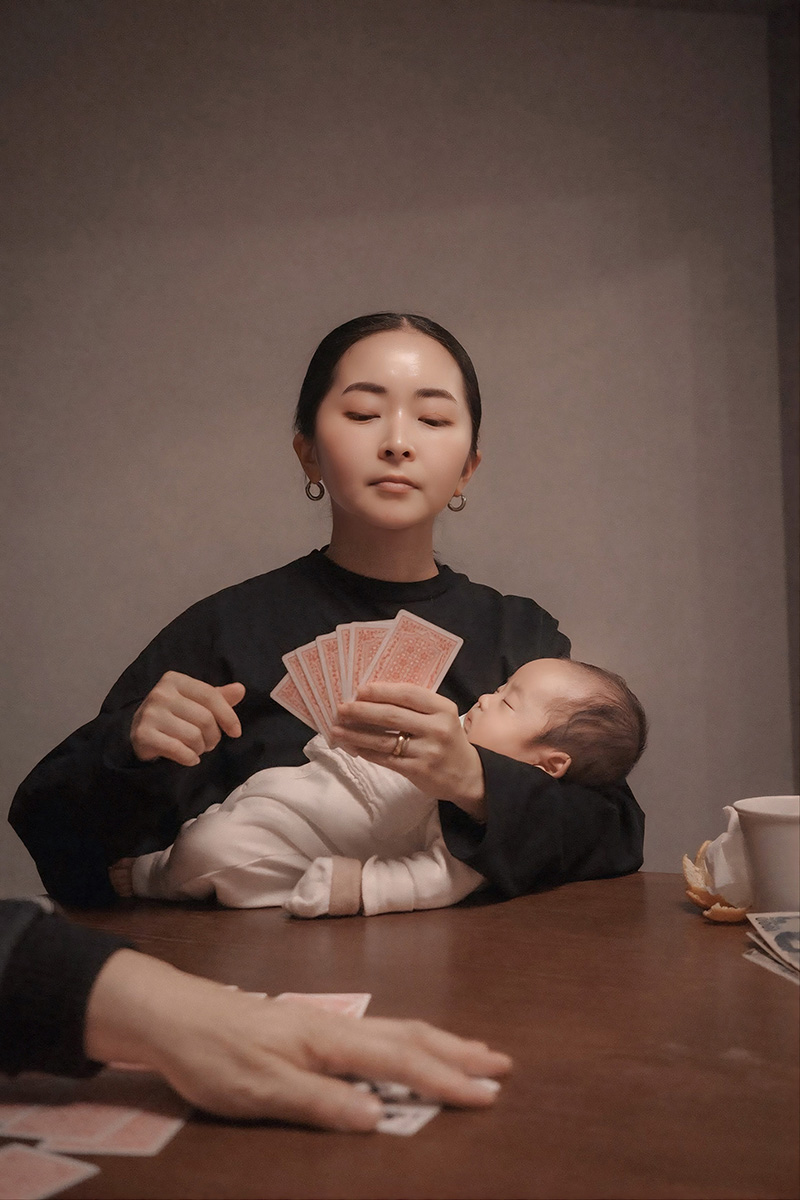
This mother appears refined and confident. Calmly assessing the situation, she prepares to play her cards, careful not to disturb the peacefully sleeping baby in her arms.
The hand in the foreground likely belongs to the father, and the small glimpse of cash at the side adds a Caravaggio-like sense of suspense to the scene.
Beyond the warmth of the moment, the image conveys a powerful message: that even after becoming a mother, a woman still possesses the strength to shape her own life and pleasures with grace and composure.
Motherhood is a noble role. May all mothers be able to hold their babies securely in one hand while playing their winning hand with the other. -
Slava Lyu-fa
(Russian Federation)
GR IIIx
Judge's comment
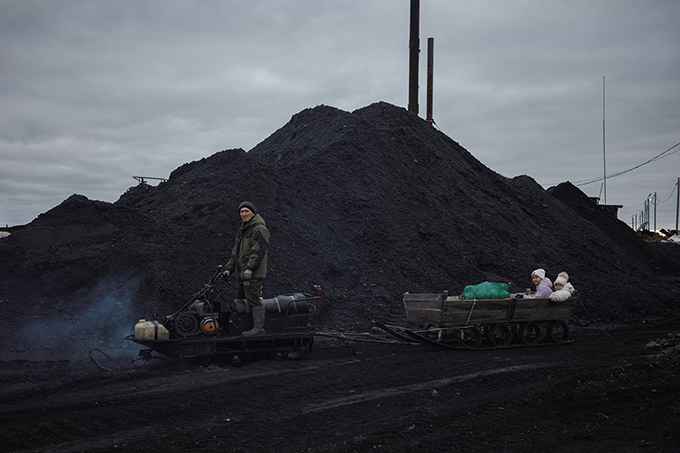
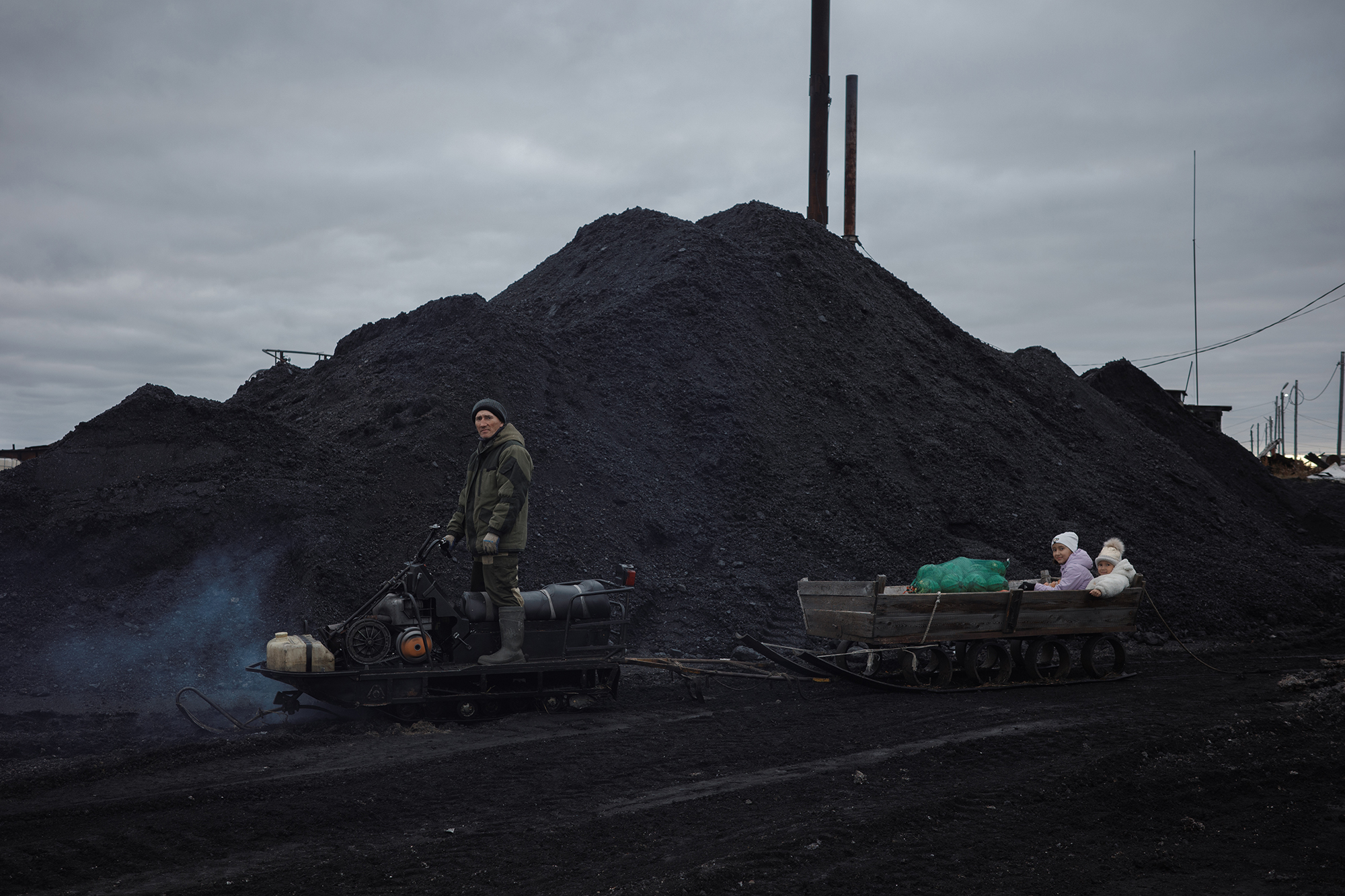
According to the photographer’s notes, this scene was captured in a remote settlement in Pokhodsk, Russia. Despite the backdrop of towering piles of black coal, the children riding in the supply cart grin broadly at the camera, dressed boldly in light-colored clothes.
This is a glimpse of an ordinary day in the Russian Arctic. Despite harsh conditions, people ingeniously modify practical means of transport, load them with the necessities of life, and carefully dress their children. The atmosphere is cold and austere, yet filled with hope.
Such an uncommon “ordinary” moment deserves to be seen — revealing the resilience and optimism of those living in the world's furthest reaches.
-
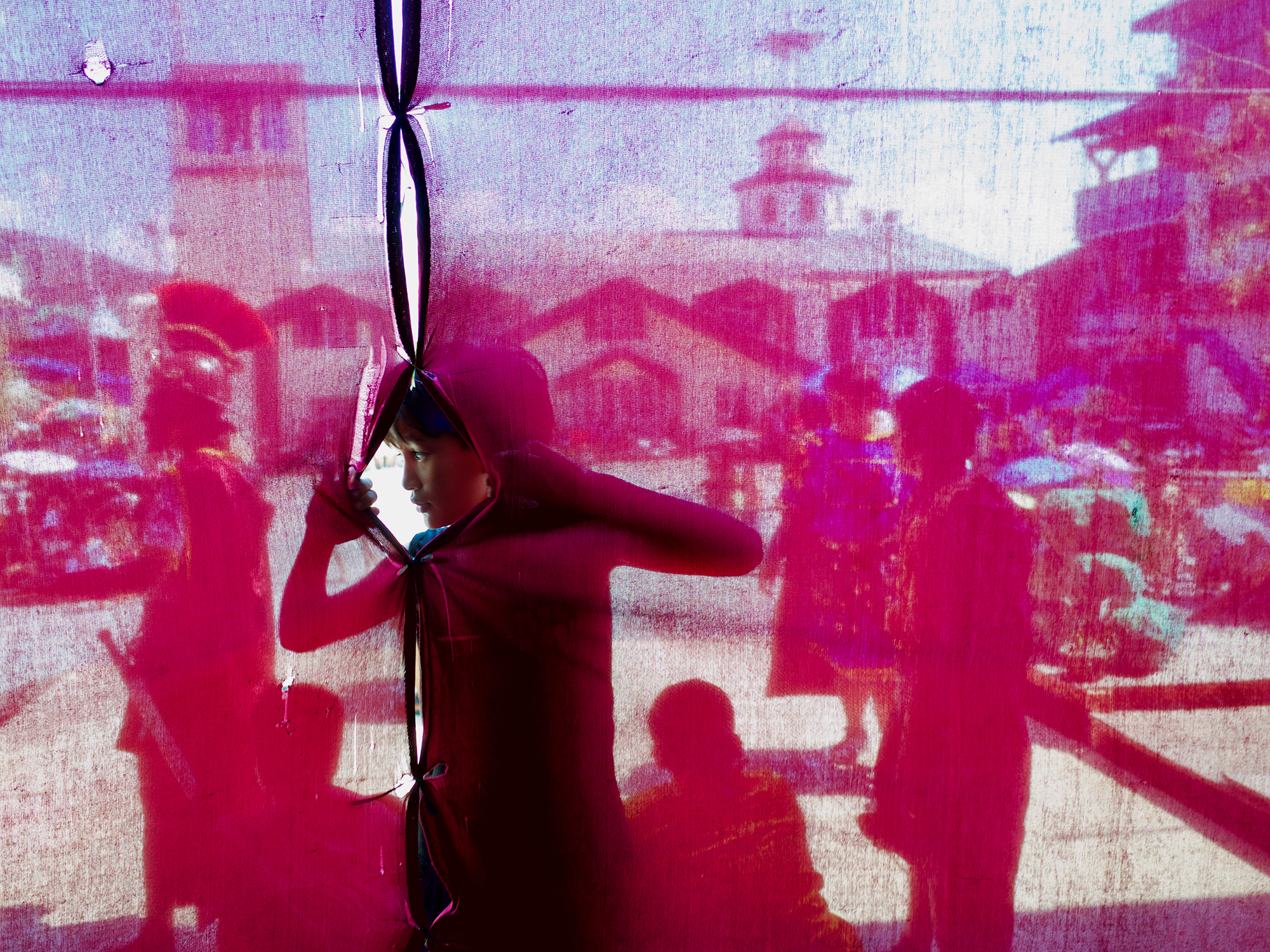
Emilsan C. Tesoro
(Philippines)
GR
Judge's comment
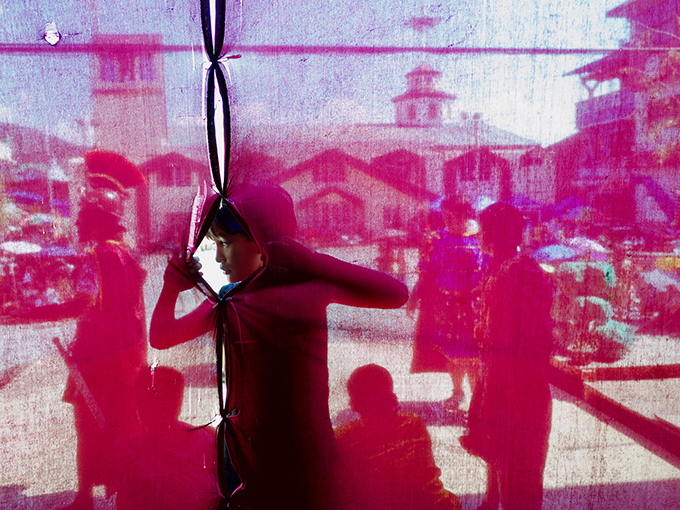
This photograph approaches the relationship between public space and individual existence through a visually charged composition.
The semi-transparent red curtain serves as the primary visual medium of the image. It not only obscures the background environment but also reshapes the act of viewing itself, compressing reality into a saturated window. The figure stands within a gap in the curtain, captured in a natural and fleeting gesture. The body becomes a point of connection between the spaces inside and outside the curtain — at once exposed and protected — existing in a state suspended between obstruction and unveiling.
The vast expanse of red is not a decorative choice, but one that carries clear semantic weight. The image transcends a single event of looking and gestures toward a broader experience of seeing. From the photographer’s perspective, it does not attempt to offer a definitive conclusion; rather, it invites viewers to become aware of their own position as observers. We are left wondering about the subject’s trajectory — are they breaking through, or blending in? -
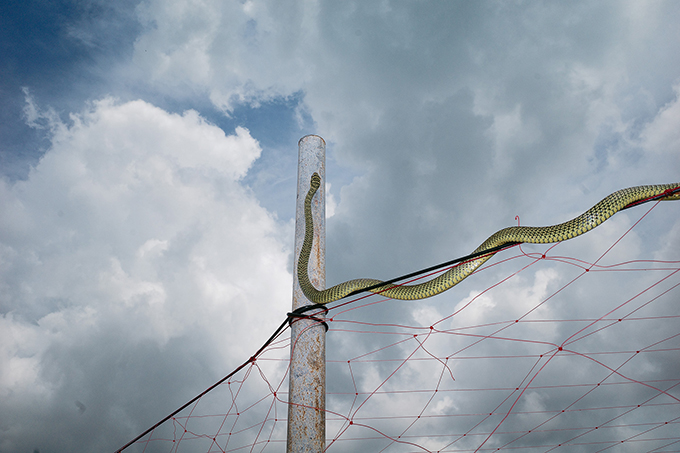
Krongrat Jindapol
(Thailand)
GR III
Judge's comment
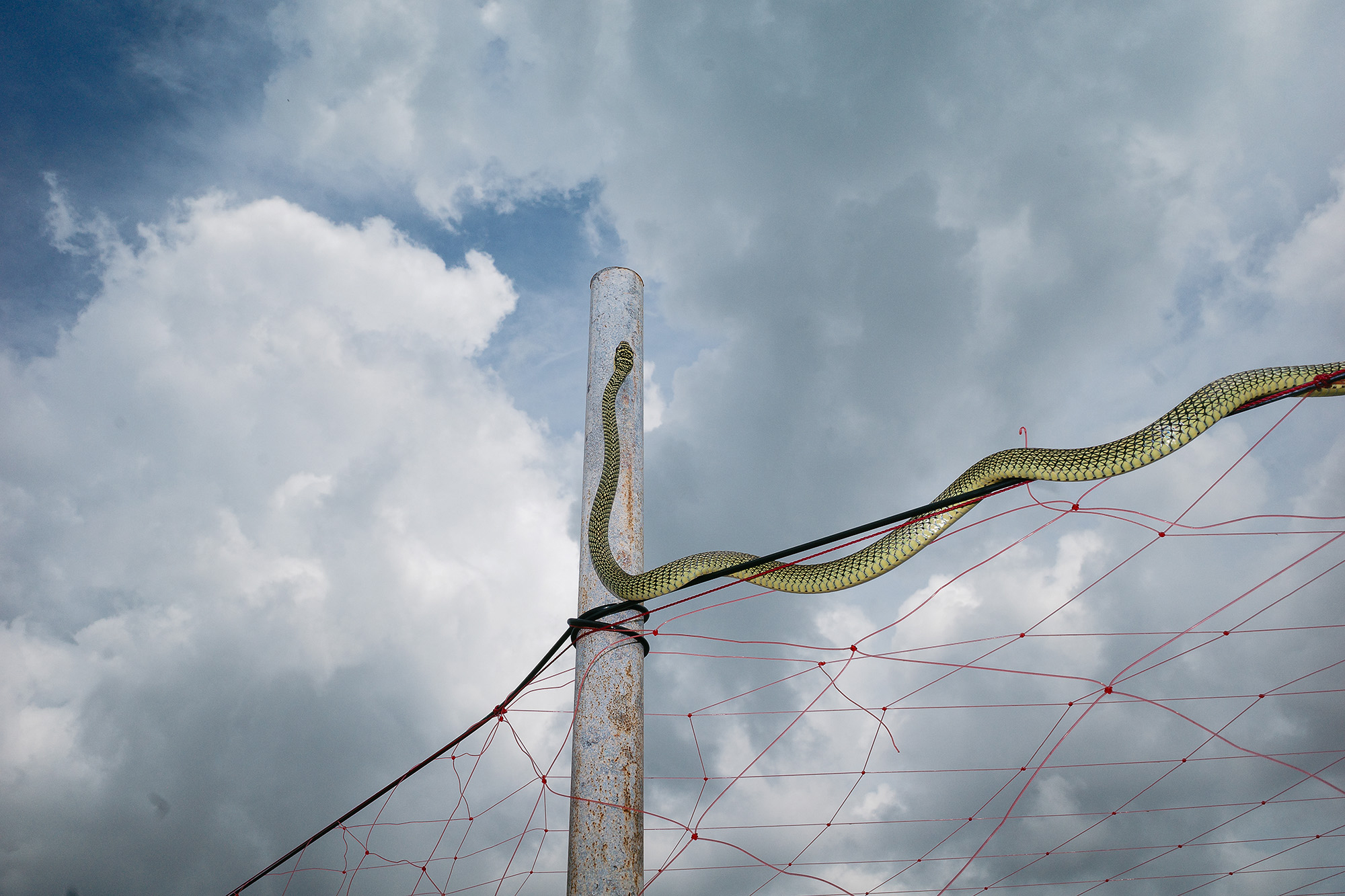
Through a minimalist yet highly controlled compositional structure, the photograph places natural form and human-made order within the same scene. The snake’s body extends along the metal pole and rope net, its organic, flowing curves forming a striking contrast with the straight, functional structures. This opposition infuses the otherwise static image with latent tension and a subtle sense of movement.
Particularly notable is the restrained and precise use of color. The green snake, red net, and gray clouds form a clear yet understated chromatic composition. By constructing sustained visual tension through relationships of form, the image avoids direct narrative cues, allowing it to detach from a specific moment and move toward a more universal level of perception and reflection.
The red net appears as a boundary or system imposed by human intention, standing in counterpoint to the snake’s free movement. This juxtaposition subtly suggests an ongoing negotiation between control, domestication, and natural instinct. -
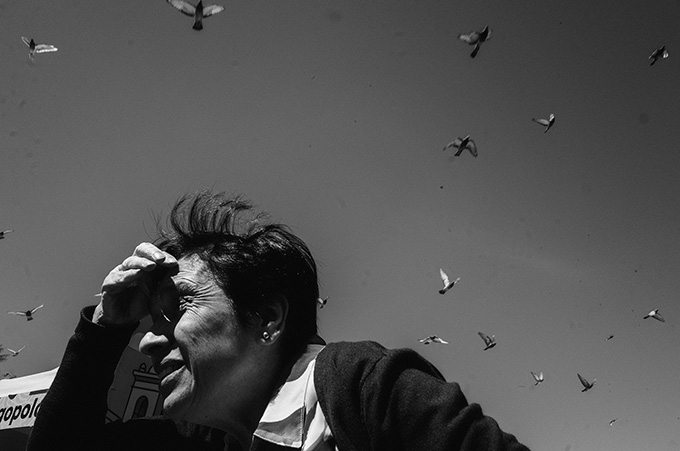
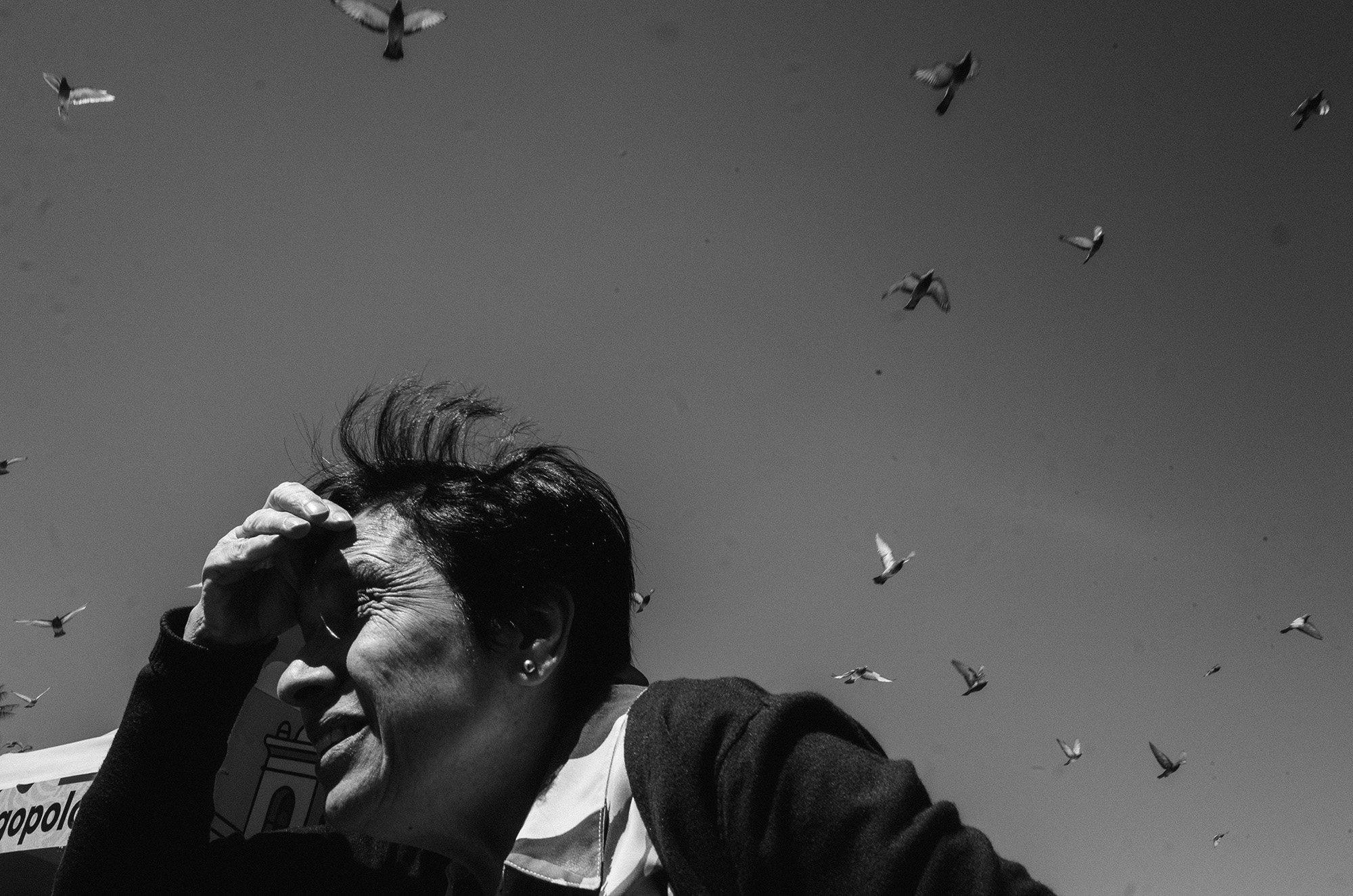
Andrés Dávila Estévez
(Ecuador)
GR II
Judge's comment
This photograph captures a moment suspended between physical reaction and emotional perception. The figure faces intense light while shielding their eyes, and the tension between facial expression and bodily tilt is clearly visible. The flock of birds in the sky forms a dynamic backdrop that resonates with the subject’s emotional state.
The photographer’s sense of timing is particularly precise. The birds are not treated as narrative subjects; instead, they are positioned within the emotional undertones of the image, working together with the subject’s gesture to create an atmosphere that envelops the scene. This amplifies the instability and openness of the fleeting moment. The black-and-white treatment effectively reduces environmental specificity, allowing the image to detach from mere photographic chronicling and emphasize the direct relationship between the body and external stimuli.
The surreal quality of this photograph is especially striking. Through careful control of posture, light, and timing, an ordinary instant is transformed into an image that speaks to a universal experience of perception.
-
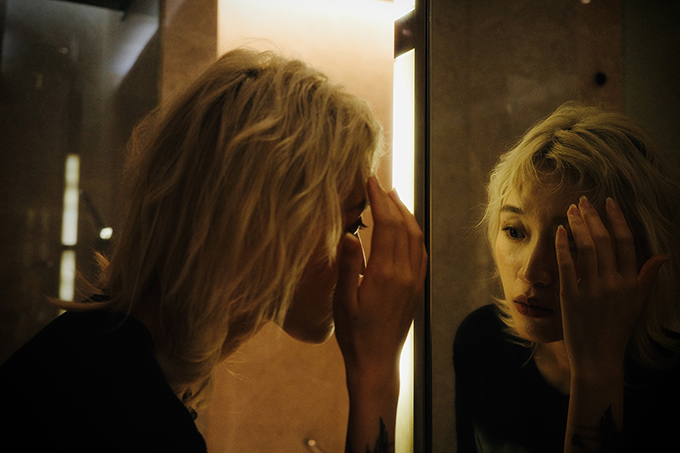
陆生
(China)
GR IIIx HDF
Judge's comment
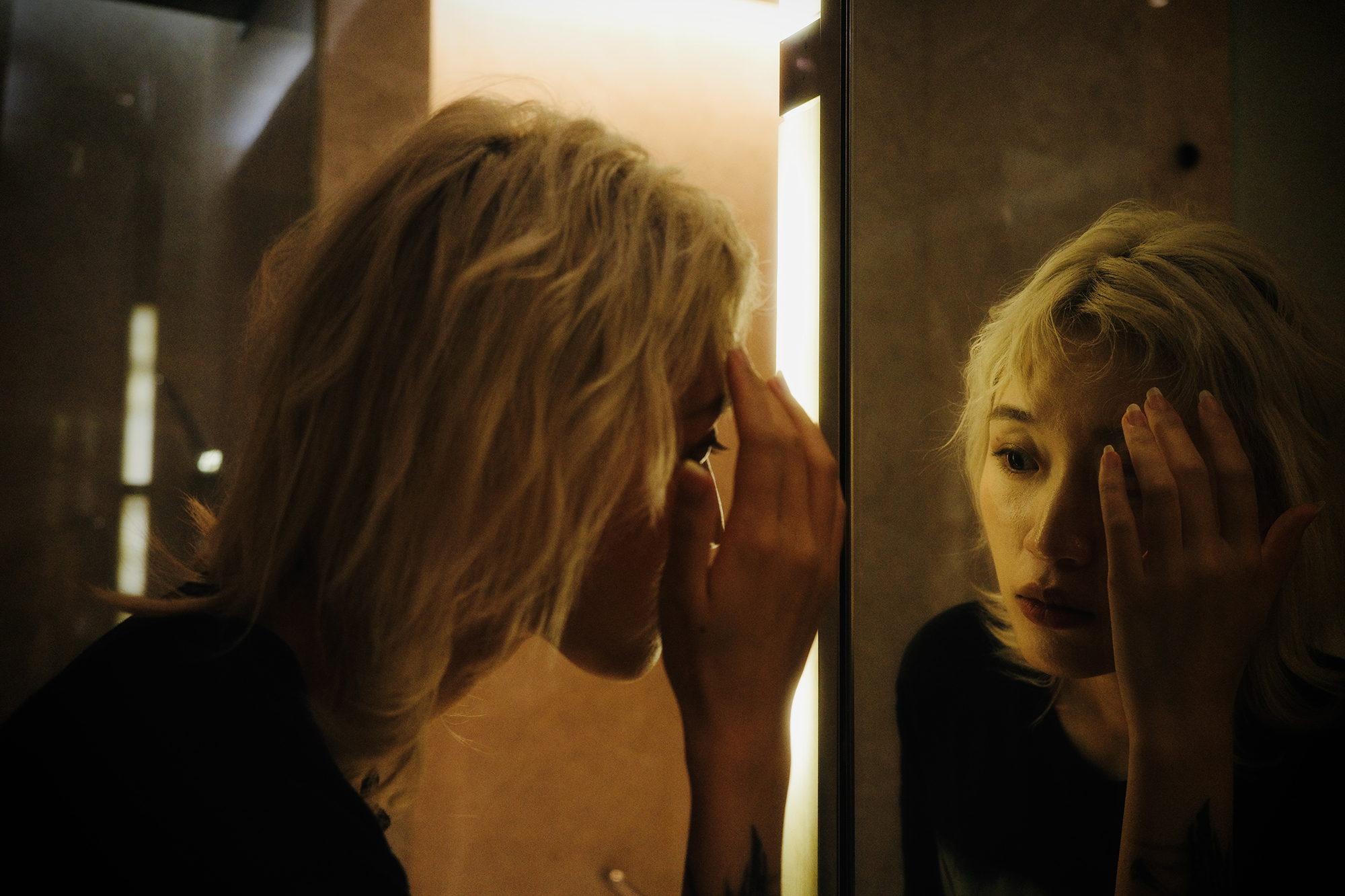
A woman with bleached blonde hair leans toward the mirror, her hand resting against her face. At first glance, her appearance suggests a Western aesthetic, yet the gaze reflected in the mirror hints at a consciousness turning inward.
This photograph does not attempt to narrate self-awareness directly; instead, it is composed from a lateral vantage point that maintains the distance of an observer. Focus is placed precisely on the eye in profile and the eye within the reflection, while the rest of the body recedes from that tension.
The photographer’s gaze does not align itself with emotion. Rather, it quietly captures the disjunction between the outward signifier of blonde hair and the self-recognition unfolding beneath it. There is no overt evaluation or critique here. What is presented is the state of being both the one who is seen and the one who simultaneously looks back at oneself.
Borrowing the format of a snapshot, the image refrains from telling a personal story or defining character. The tension between exterior and interior is offered as structure, and the blonde hair functions not as adornment but as a device that renders visible a condition in which self-awareness becomes unavoidable. The restrained distance ultimately leads the act of looking itself to become the central subject. -
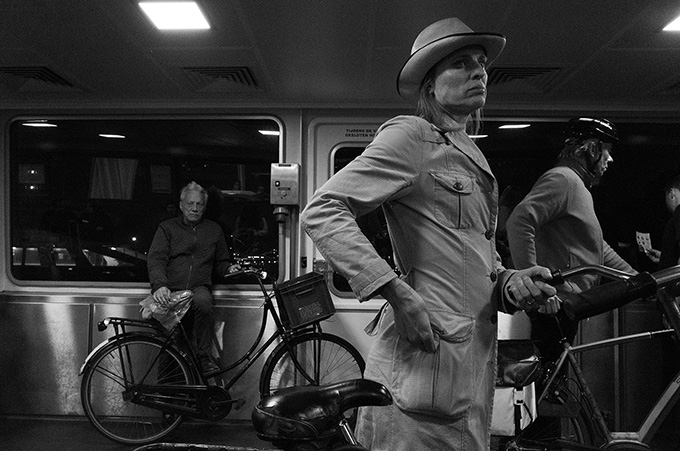
Rissara Ongkositporn
(Thailand)
GR II
Judge's comment
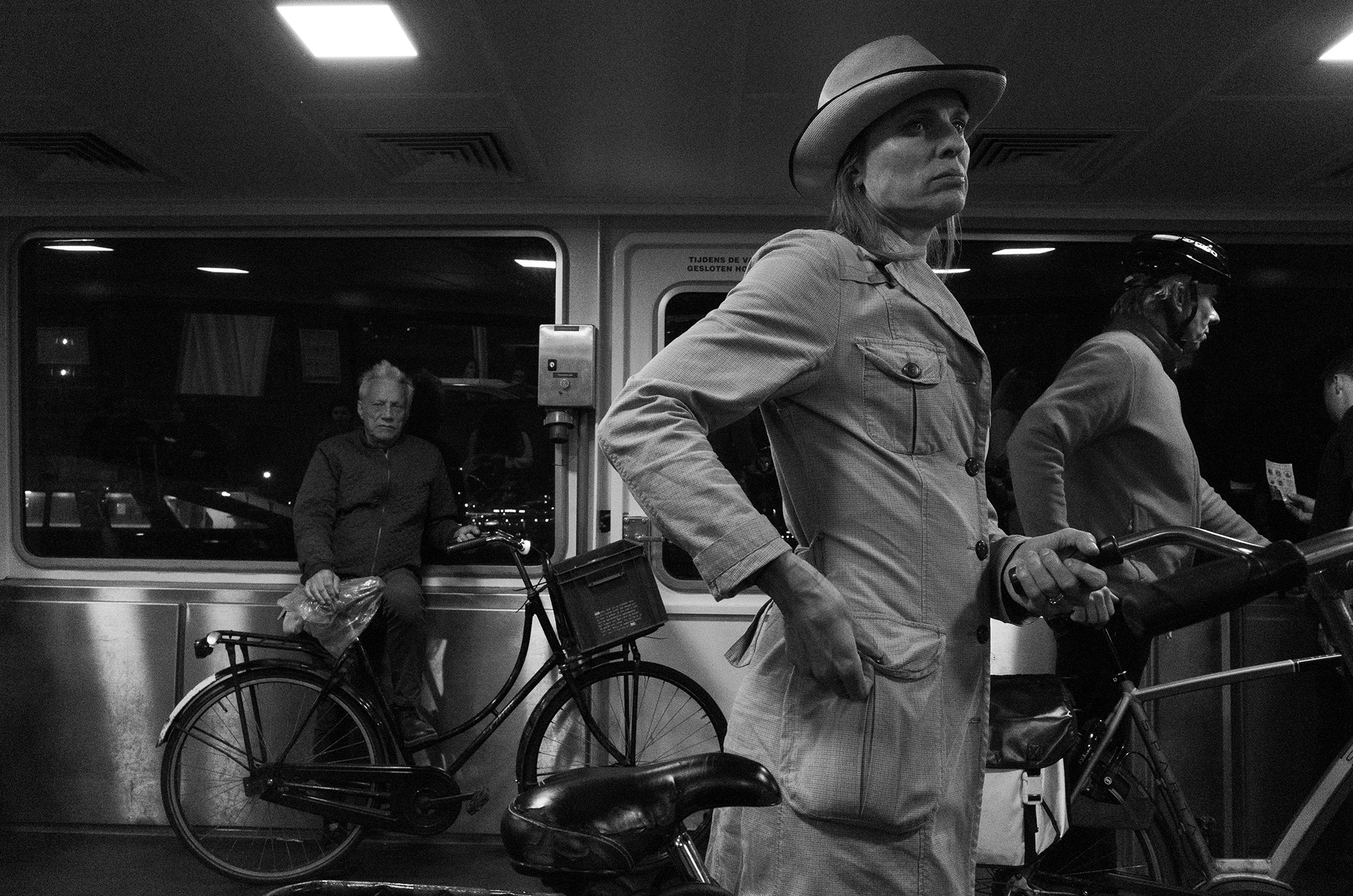
The slightly compressed framing toward the right side of the image introduces a subtle restlessness across the entire frame. The eye is drawn naturally in that direction, where a sense of spatial constriction leaves no room for escape. This compositional decision suggests that the scene is a point of transit, a space not yet oriented toward departure.
Four figures appear in the image. They are unrelated to one another. Each carries a separate temporal rhythm, though one alone occupies the role of the observed subject within the photographer’s field of attention.
The low angle amplifies the presence of the central woman, yet paradoxically underscores her displacement. It evokes the suspended uncertainty characteristic of moments before departure. The presence of bicycles indicates that this is likely a short-distance ferry used in everyday life—movement not as the beginning of a long journey, but as an extension of routine.
Inside the vessel, the night is flattened into uniform light, while the exterior landscape remains obscured. A fragment of Dutch text above the window offers a faint geographic clue, though it resists definitive identification. But it remains reasonable to imagine that this is somewhere in Europe—perhaps a ferry in the Netherlands.
What this photograph captures is neither movement nor event. It records time halted just before it begins, a moment shared by strangers who do not intersect. Through framing, light, and fragments of language, the image patiently constructs this suspended state, ultimately conveying more than it explicitly shows. -
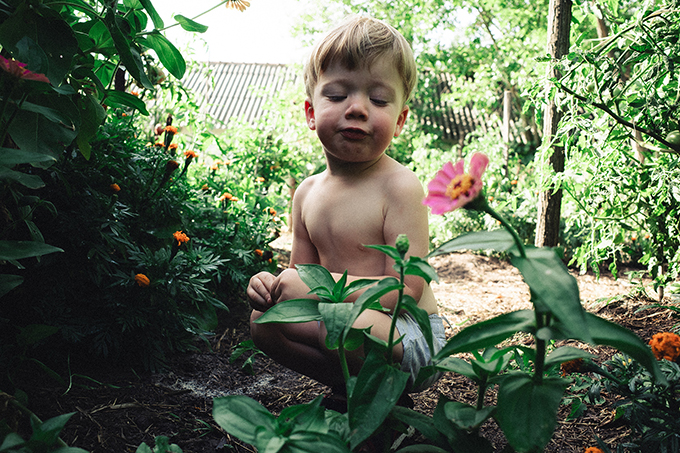
Anna Sawangwan
(Hungary)
GR III
Judge's comment
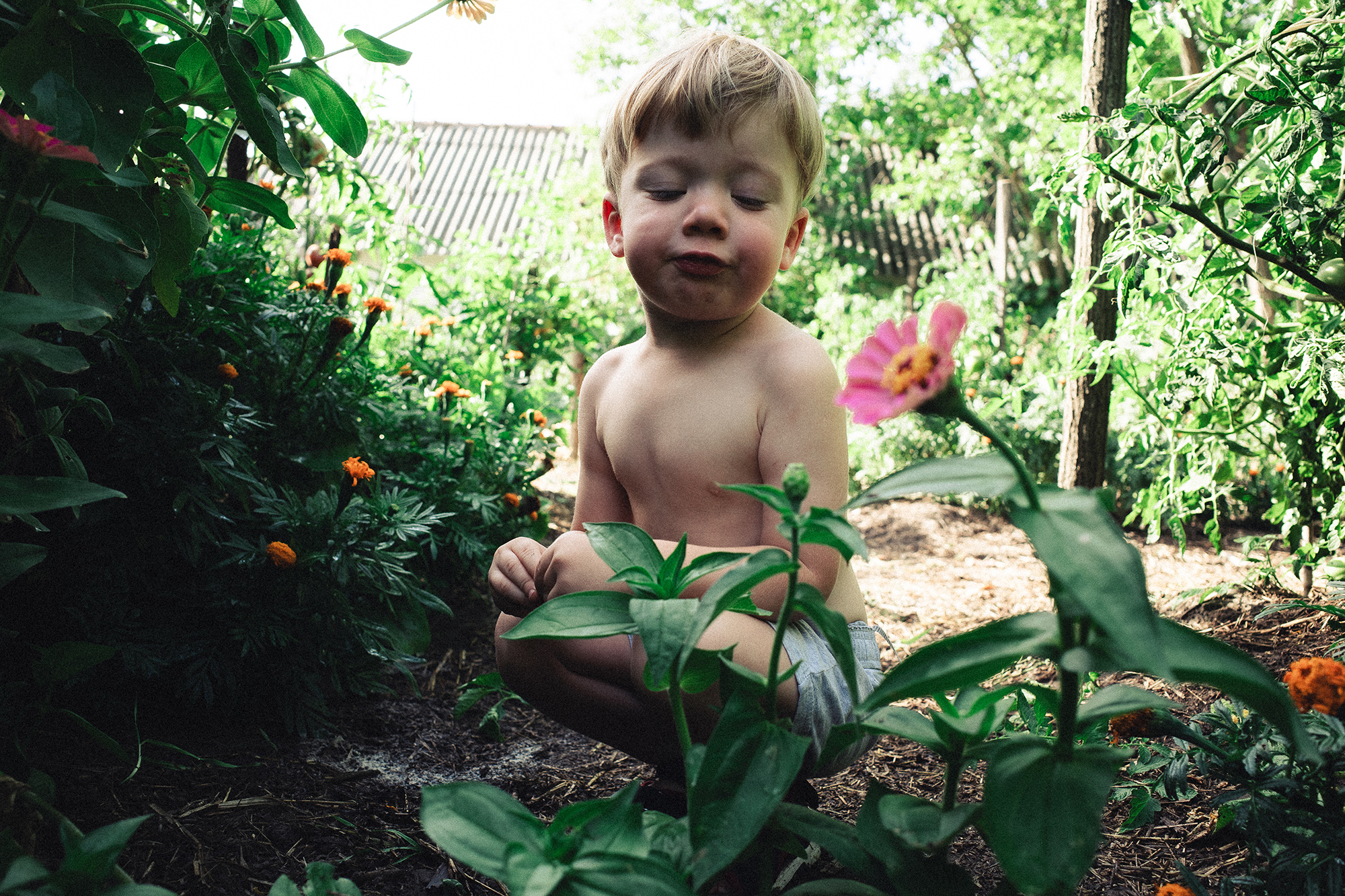
A half-clothed child is photographed head-on, as though living in a kind of paradise. With eyes closed, the child appears almost meditative. The image was likely made at arm’s length, the photographer extending a hand while viewing the screen. This method introduces a subtle distance between subject and photographer, softening the pressure of the gaze.
Sunlight and shadow intersect across the frame; illumination is uneven rather than uniform. This delicate state of tension conveys the child’s fleeting mood and bodily awareness without explanation. The relatively shallow depth of field is equally significant. Rather than functioning as a straightforward record of what was seen, the photograph generates a sense of “atmosphere” that exceeds reality itself. Surrounded by foliage and vivid color, the setting evokes the idea of paradise, yet never lapses into sentimentality.
Frontal composition and indifference, proximity and distance—through the coexistence of these oppositions, the image hovers in a space that is neither documentation nor narrative. The photograph does not simply reproduce reality; it retrieves a sensation that exists just before reality takes form. Quietly, it demonstrates that capacity.
-
Namseog Song
(Republic of Korea)
GR III
Judge's comment
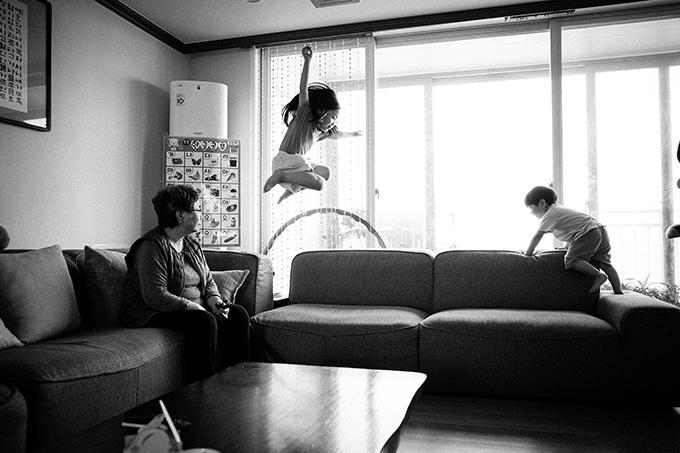
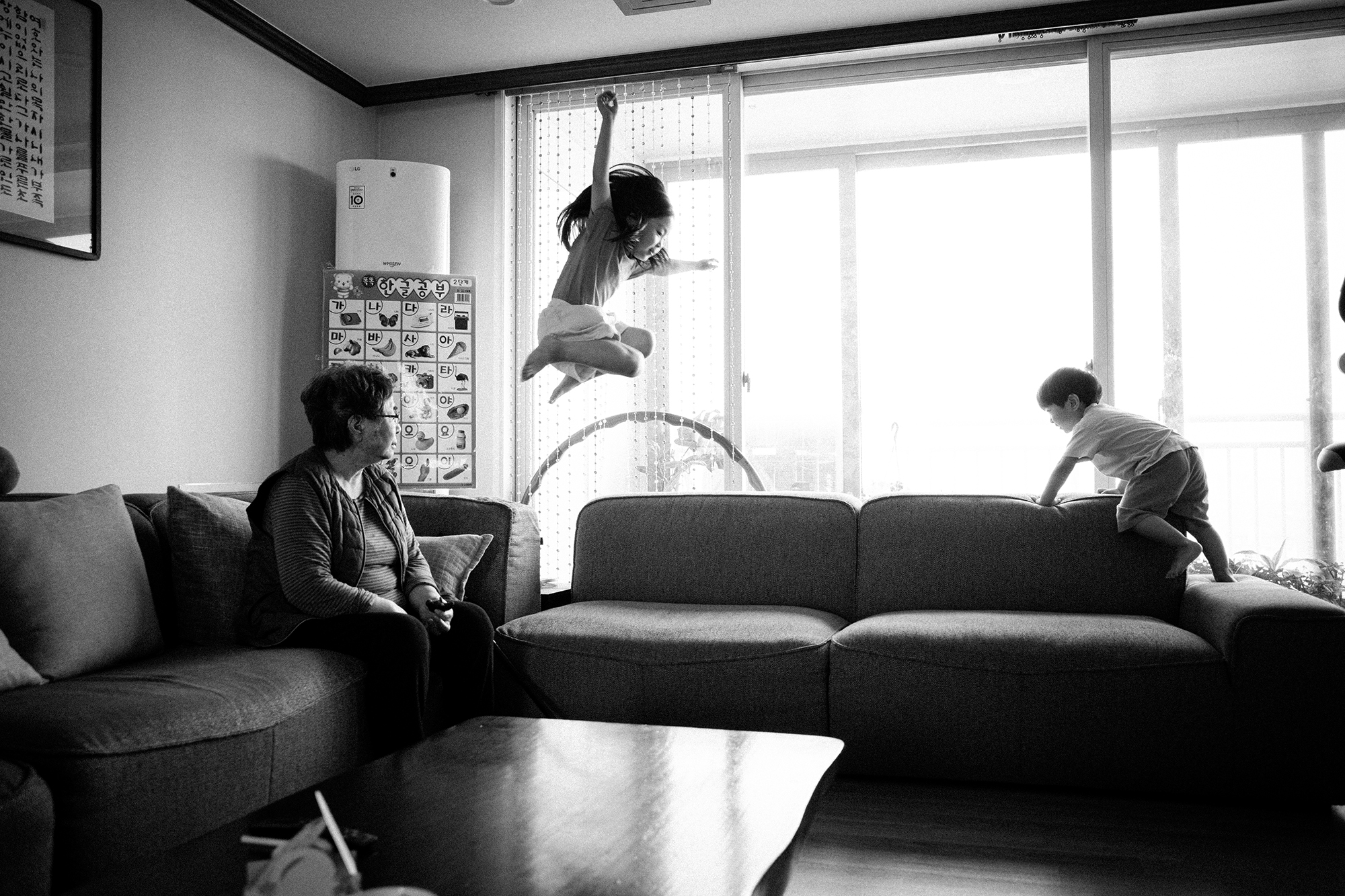
There’s something so real about this and how it relates to daily life. Kids being chaotic on the sofa while the adults quietly observe. That mid-air jump is a great catch; it perfectly captures that weird mix of high energy and calmness you only find at home. Going with black and white was a smart move. It makes the living room feel less like a random house and more like a memory.
The composition works really well too. The way the sofa is positioned really helps, too. It lets your eyes just naturally follow the action from the kids on one side over to the adults on the other and vice versa. It just feels like you're standing right there in the room with them.
It’s not trying too hard to be 'art,' and that’s why it works. -
HAI NGUYEN VAN
(Vietnam)
GR IV
Judge's comment
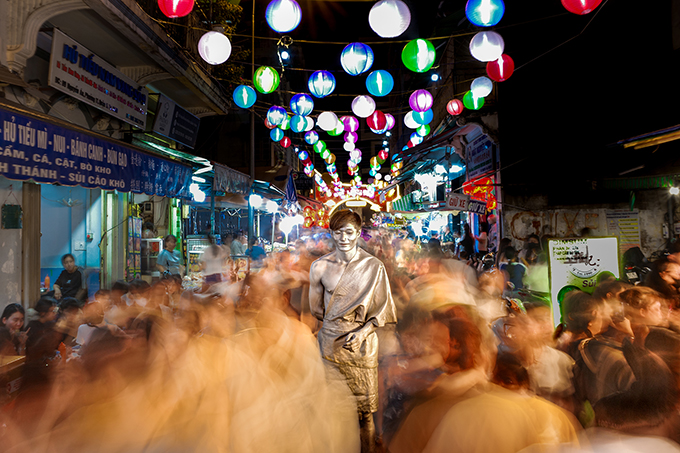
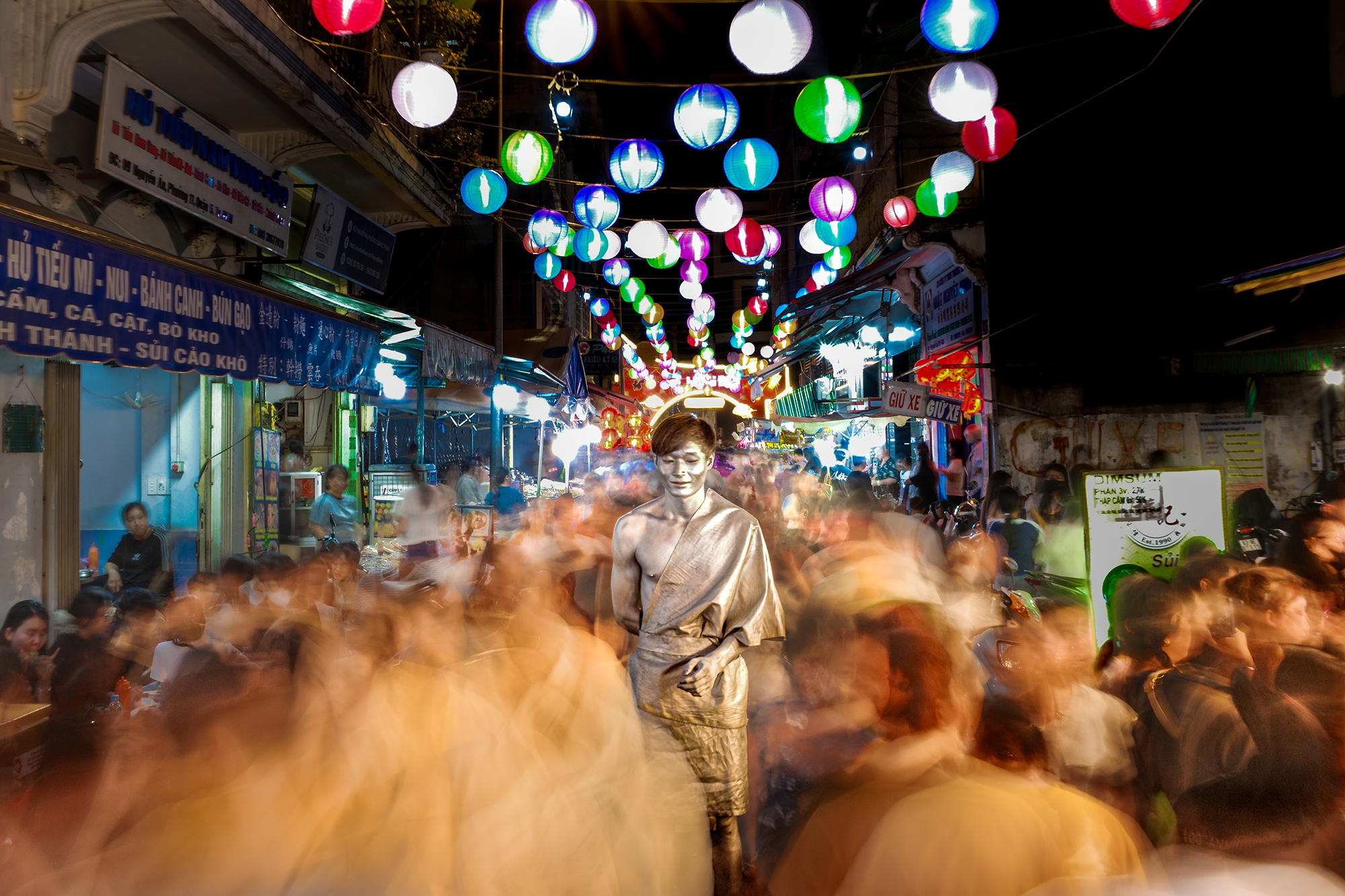
This shot feels so familiar, it’s that exact vibe of a busy street or a night market where everything just keeps moving. You’ve got people heading home from work, meeting up with friends, or just passing through.
The motion blur is what really caught my attention. It makes the whole scene feel loud and hectic, exactly how it feels when you’re actually standing in a crowd like that. But then, you notice that one person in the middle who’s just... still. It’s like that moment where you stop for a second to just breathe and watch the world rush past you.
That contrast between the blur and the stillness is what makes the photo work. It’s simple, but it really tells a story. -
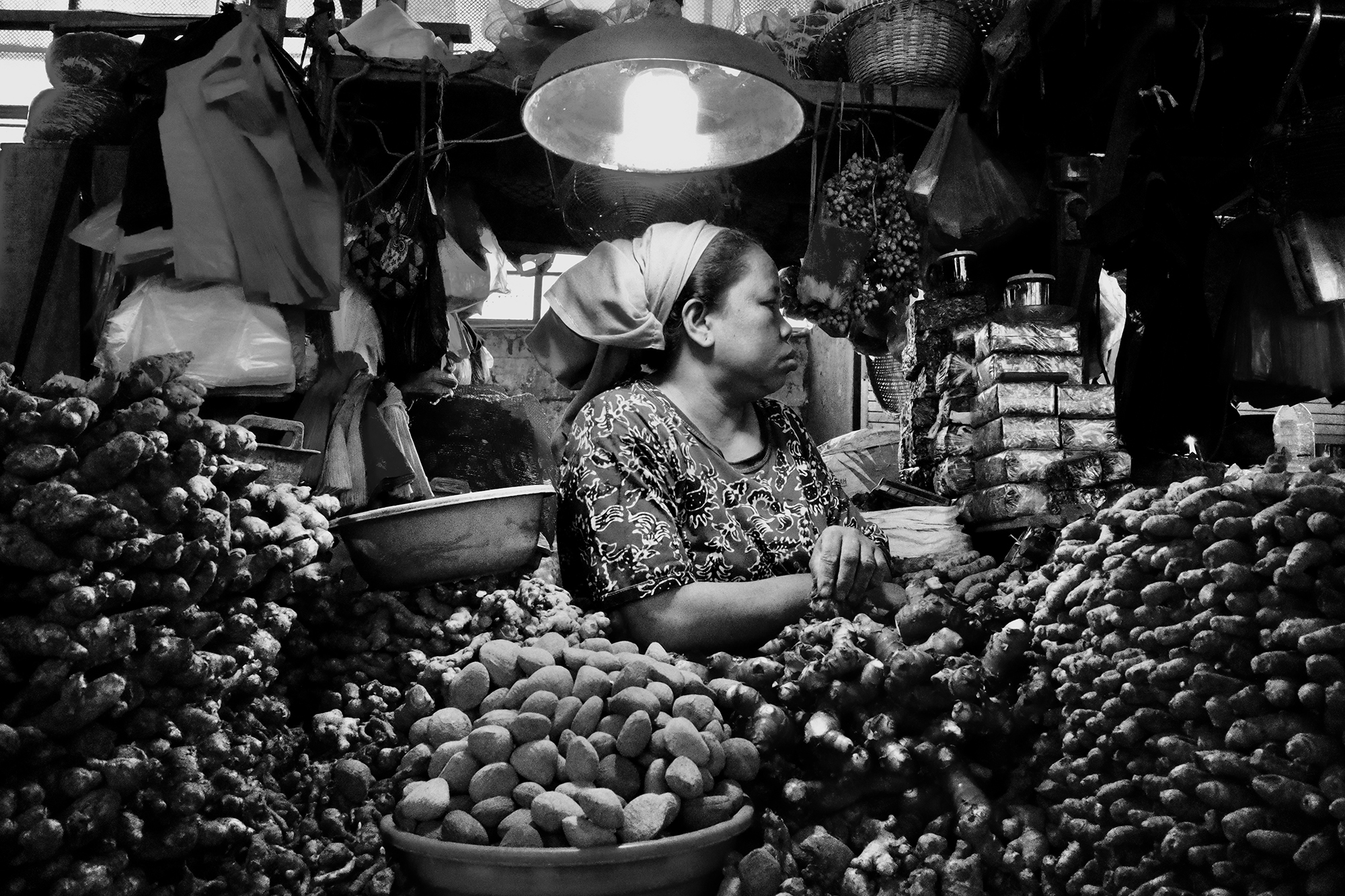
Matthew Sugiarto
(Indonesia)
GR IV
Judge's comment
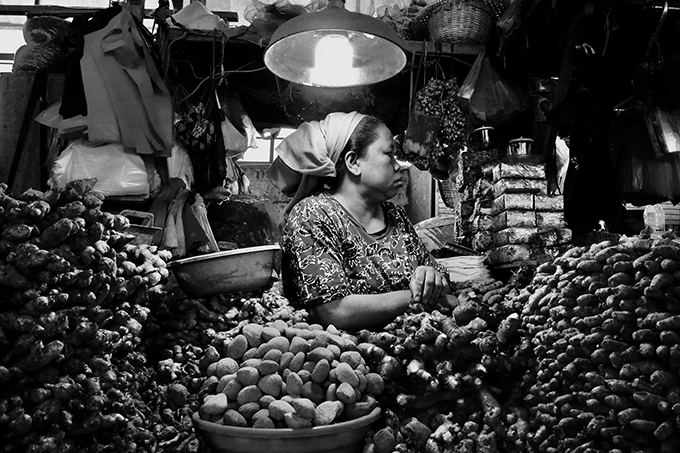
This shot works because it’s so simple, it doesn't feel like the subject was told how to pose. Seeing the vendor just sitting there among all her items makes the whole thing feel alive and real. It’s the kind of moment you’d walk past every day without thinking, but here it feels worth stopping for.
Using black and white really helps. You end up focusing more on the textures and the overall mood rather than getting distracted. The light coming from above is a nice touch, too. It’s subtle enough that it doesn't look like a studio setup, but it’s just enough to pull your eye right to the person. It’s clear the photographer was actually paying attention to the surroundings rather than just snapping a random photo.
ARCHIVE


